FY2020 Q1 EB-5 Processing Statistics

The USCIS Immigration & Citizenship Data page has posted the long-awaited EB-5 form data for October to December 2019 (FY2020 Q1).

The main questions in my mind before I saw the data:

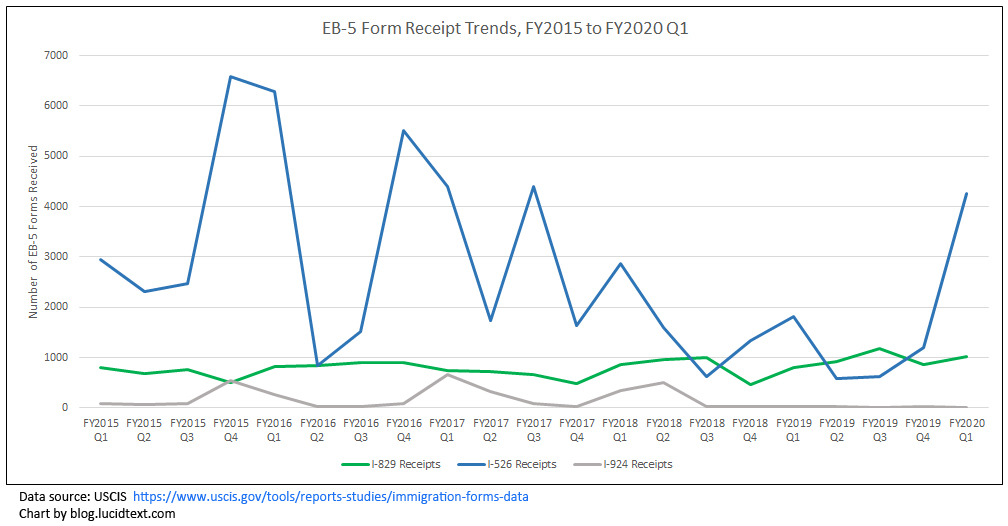
  • Was there really a massive I-526 surge ahead of the November 2019 deadline to increase the investment amount?
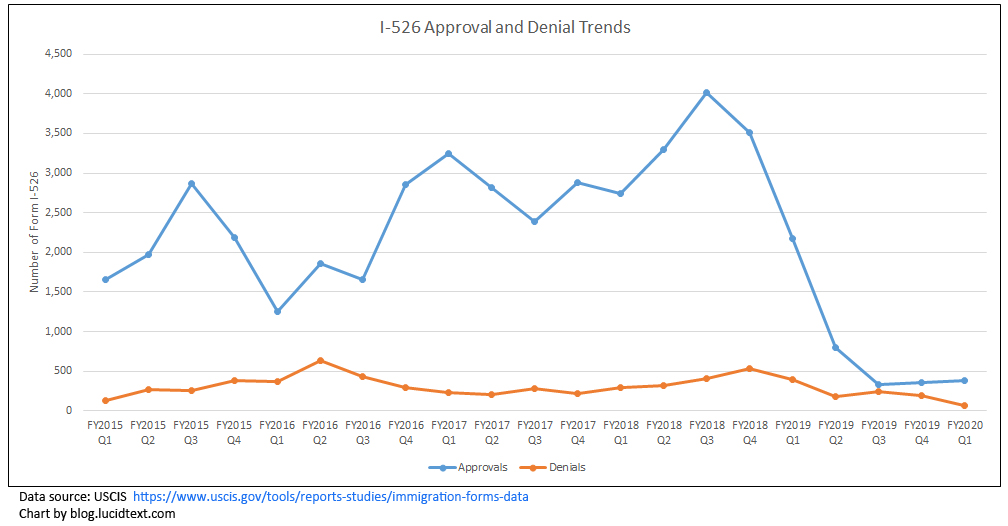
  • Did IPO show any trend toward improved productivity?

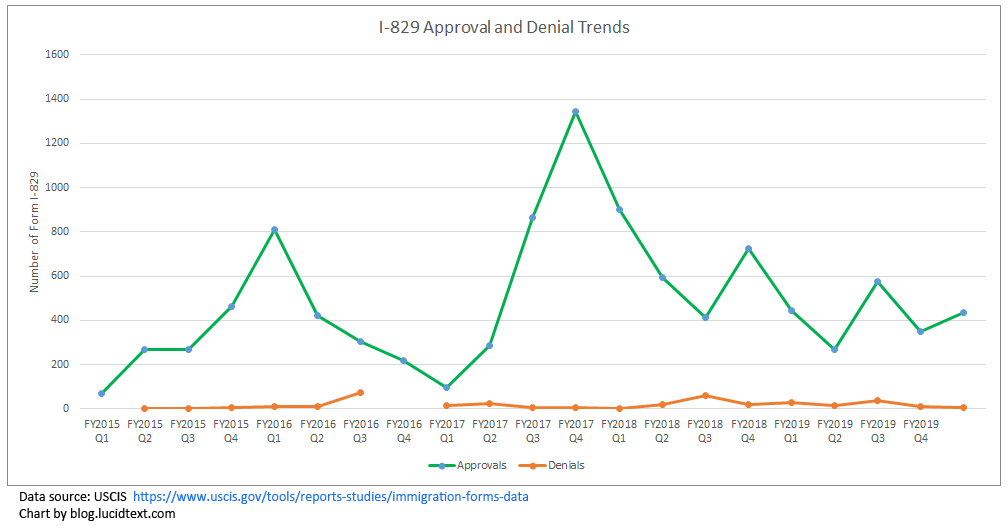
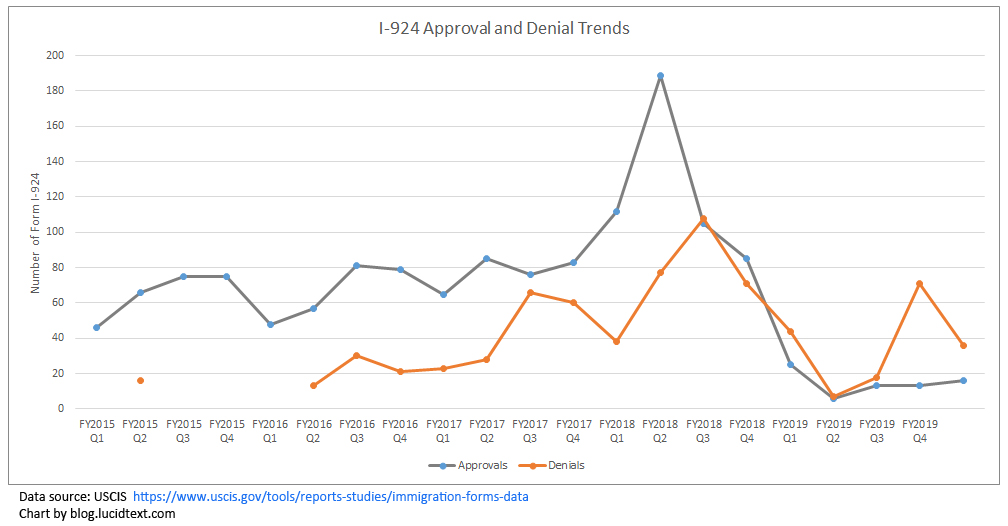
I made my data summary charts go back to 2015 this time, to put recent trends in context. As the charts illustrate, there was a large but not historically large surge in I-526 receipts last quarter.  So far from clocking any productivity improvement, IPO once again broke its record for fewest adjudications of all time. Clearly, adjudication was not among IPO’s priorities in 2019.  IPO did not even accomplish the minimum of adjudicating sufficient I-526 over the past four quarters to claim a full annual visa quota. I-924 adjudications remain near 0, while I-829 adjudications continue at a steady low level. Now we’re left to hope for FY2020 Q2 data, which IPO Chief Sarah Kendall promised us last month would show some improvement — improvement we’ve been seeing anecdotally. To quote again from Kendall’s remarks about new processing procedures:

USCIS leadership views these initiatives as absolutely vital to the success of the EB-5 program. We acknowledge that case completion rates have decreased partly because of these activities, and we understand the concerns that raises for our stakeholders. With a lot of the infrastructure development now behind us, IPO is better situated to improve productivity. In fact, preliminary data for February shows a step in the right direction. The USCIS Office of Performance and Quality anticipates publishing new data in the coming month.

This quarter’s data release included a new table that I’ll analyze separately in another post.


Processing, TEAs, Virtual Meetings

Processing Developments

USCIS has not yet updated the Check Case Processing Times page to a new format or with any new content to reflect the Visa Availability Approach that’s now being implemented for I-526. The page update may not happen until June, considering that the report is nominally based on the situation two months earlier. Or the update may never happen, considering the long-term disconnect between this page and reality. However, I see positive signs that IPO is picking up the pace of adjudications, at least with I-526. The USCIS historical processing times page indicates a significant drop to the average I-526 processing time for October 1, 2019 to January 31, 2020, despite what the check case processing times page said (with the historical average reported at 12.6 months,  vs. 19.8 months average for FY2019). And I’ve personally noticed a significant uptick in volume of decision reports since the COVID-19 situation started.  I guess that the lockdown has two benefits for EB-5 adjudications: (1) that IPO adjudicators now have nothing to do but work on IPO adjudications, where before their time was also occupied with non-adjudicative work like meetings and interagency coordination and site visits and agency priorities outside IPO, and (2) that current conditions make it no longer such a fun game to strain for reasons to delay and deny petitions that represent economic development and job creation.

TEA Resources and COVID-19 Unemployment

As U.S. unemployment skyrockets, what will this mean for the EB-5 program, which exists to promote economic development and job creation, and particularly to incentivize investment in areas of high unemployment?  Under current policy and practice, EB-5 is not positioned to react in a timely manner. We see unemployment rising in real time, but will not have the data to prove it for TEA analysis until 2021.  Next year, TEA analysis will be based on annual averages for 2020, which may or may not be astronomical depending on how long the current crisis lasts, and whether or not job loss will become permanent based on employers going out of business. Incentive programs are currently trying hard to prevent such an eventuality.  If by chance the entire country ended up with absolute high unemployment, the EB-5 TEA incentive would not help because it defines “high” in relative terms: local as 150%+ of the national. So future changes to the TEA map will depend on relative economic impacts on different areas. It will be interesting if New York City, which the “TEA reform” drafters tried so hard to eliminate from the TEA incentive, ends up in play again after all thanks to disproportionate COVID-19 impact. Alternatively, Congress could make statutory changes to EB-5 with the goal to make it more flexible and able to react and be a genuine tool to help in our current economic crisis. For that to happen, people lobbying for EB-5 reform should get realistic, proposing changes that can possibly be enacted because they’re designed to look reasonable and public spirited and reflect well on the enacters, not greedy and blind to repercussions from the next day’s headlines.

Resources:

Virtual EB-5 Meetings and Resources

EB-5 Investors Magazine is holding a Virtual EB-5 Expo this week April 16-17. This includes virtual exhibiting and real-time networking opportunities besides educational panels. Significant discounts are now available.

IIUSA has been holding webinars with expert panels in lieu of the usual Spring conference.  There are two live panels coming soon:

Recordings are available for previous IIUSA courses and panels:

EB5 Talk Podcasts remain a helpful resource

Industry-specific resources for COVID-19

This post begins to collect practical resources for project companies and investors who are concerned about specific COVID-19 business impacts, stimulus effect, and economic outlook in sectors that particularly use EB-5 investment.

Commercial and Multifamily Real Estate

Hotel Industry

If you want to better understand the risks facing and help available to a particular EB-5 project, I suggest not only looking at industry-specific analysis such as the above, but also consulting resources from the state, county, and municipality where the project is located. Here in Utah, for example, state and local government and private organizations have been very aggressive and proactive in addressing the COVID-19 economic challenge, supplementing resources available at the federal level. The near-term and long-term outlook for a business will vary depending on its location as well as industry, so location and industry resources are helpful. EB-5 investment is less material to the outlook, so immigration consultants are less helpful here.