7/26 EB-5 Stakeholder Engagement

Today’s EB-5 stakeholder engagement was very substantive, with the USCIS panelists providing detailed answers to many questions submitted in advance of the call. I encourage you to review my recording if you weren’t able to join the teleconference. Robert Silvers, Senior Counselor to the Director, took an active role in this call and seemed well-prepared and genuinely engaged, upholding the standard set by Director Mayorkas.

Rob Silvers discussed process enhancements for EB-5, including the new EB-5 program office, new hires, case specialization, and the forthcoming review board for I-924 applications recommended for denial. He also suggested that a new draft of the EB-5 policy memorandum will be published in the next four weeks, and that movement on the “tenant occupancy” cases can be expected “very soon.”

Stakeholder questions addressed in the call included questions related to the requirements for sustaining investment, evidence requirements for I-924 petitions and amendments, metrics for determining acceptable geographic boundaries for a Regional Center, RFE practices, acceptable evidence of non-EB-5 capital commitments, acceptability of investor returns and distributions during the CPR period, acceptability of investors receiving real estate as a return on investment, counting jobs in business acquisition scenarios, and the issue of deference to prior approvals. For more detail see  the detailed summary of the call posted by the EB-5 Center blog, or review my recording of the call.

5/1 Engagement Mega Executive Summary! (Tenant Occupancy! TEAs! Bridge Financing! RC Sunset! More!)

Many people left the California Service Center disappointed after the Quarterly EB-5 Stakeholder Engagement on 5/1/2012, but now USCIS has made up for telling us little in person by publishing an amazing 17-page Executive Summary that covers what they didn’t say at the meeting. I’ll probably be commenting on this summary for weeks. Particularly note the Q&A on tenant occupancy, which is less ambiguous and more restrictive than the guidance from Chief Economist John Rodgers. I’m copying a few of the hottest new releases below, and I encourage you to download and review the full document.

Selected Q&A from USCIS’s Executive Summary of the 5/1/2012 EB-5 Quarterly Stakeholder Engagement

NAICS Codes
Q: In a regional center application, kindly confirm that two digits of North American Industry Classification System (NAICS) codes are considered sufficient with the industry cluster specified and economic report elaborating the same. The rationale behind this is because in a retail and office setting, three digit code tenants are not ascertained at the time of filing the I-924.
A: This is not acceptable. Even within clusters and projects that incur similarities, USCIS requires four digit NAICS codes at a minimum.

Permissible Expenditures
Contingencies
Q: Any reasonable budget will include line items for “contingencies” and “operating capital” which are required in order to sustain a business successfully during the development process. Some business plans have been approved with such lines (as they should be) while others have been rejected specifically citing these budget lines as “not being job creating activities”. Please confirm that such expenditures are permissible – no business plan is believable without such budget lines.
A: Whether a particular line item in a budget presented in support of an EB-5 petition is appropriate cannot be confirmed in general, but must be analyzed in the context of the instant case. However, USCIS does agree that a credible business plan should contain a reasonable budget that outlines the prospective expenses of the business.

Real Estate Acquisition
Q: One of the most effective ways to attract investors is for the business into which they are going to invest to buy and own the real estate in which they will operate the business, rather than merely lease it. This makes the investor feel that the business is more likely to succeed, or, if it fails, the real estate could perhaps be used to establish a second business. Therefore, where part of the investment expenditure is spent on real estate in which the business is to be operated, is it correct that such expenditure is a job creating expenditure for which appropriate job creation credits can be obtained. For example, if an investor invests $1million to acquire a building for $500,000 and then spend another $500,000 to renovate and equip as well as fund operating capital for a restaurant, would the entire $1million be considered an appropriate EB5 investment, assuming it otherwise qualifies.
A: This is a simple transfer of real estate with renovations occurring subsequent to the purchase. The renovation and outfitting of the facility will create temporary jobs, and it is possible that a trivial number of jobs could be created by the fees charged for the real estate transfer. Summarily, yes—the $1 million could be considered an appropriate EB-5 investment—assuming that the other requirements of the EB-5 regulations are satisfied.

Bridge Financing
Q: Under what circumstances will USCIS approve bridge financing? Will the memo address this? This does not appear to be covered with adequate specificity in the last iteration of the policy memo. Stakeholders are not aware of any written guidance on bridge financing other than am AAO decision on the Victorville case, and this is an extreme example with specific facts. Of the two memos in 2009 (June and December) on construction, the December 2009 memo superseded the June memo, but stakeholders continue to receive RFEs referencing the June memo.
A: Pursuant to 8 C.F.R § 204.6(j)(4)(i), the new commercial enterprise, not the EB-5 investors, must create the requisite employment. As such, it is acceptable for the developer or the principal of the new commercial enterprise, either directly or through a separate job-creating entity, to utilize interim, temporary or bridge financing – in the form of either debt or equity – prior to receipt of EB-5 capital. If the project commences based on the bridge financing prior to the receipt of the EB-5 capital and subsequently replaces it with EB-5 capital, the new commercial enterprise still gets credit for the job creation under the regulations.
This policy will be issued in the forthcoming EB-5 policy memo in Section C, the Creation of Jobs section:
“It is important to recognize that while the immigrant’s investment must result in the creation of jobs for qualifying employees, it is the new commercial enterprise that creates the jobs. This distinction is best illustrated by an example:
Ten immigrant investors seek to establish a hotel as their new commercial enterprise. The establishment of the new hotel requires capital to pay financing costs, purchasing the land, developing the plans, obtaining the licenses, building the structure, taking care of the grounds, staffing the hotel, and the many other types of expenses involved in the development and operation of a new hotel. The immigrant’s investments can go to pay part or all of any of these expenses.”

Verifying RC Job Creation
Q: Can expenditure models based on RIMs II Final Demand Multipliers, if they project adequate number of jobs to satisfy the 10 full time job requirement per investor, satisfy the job creation requirement and proof of such expenditure submitted with the I-829 in accordance with the business plan submitted with the I-526?
A: This is an acceptable methodology if the structure of the business entities precludes the acquisition of tax documents or other evidence of employment for the components projected to be involved in direct job creation. USCIS would require a detailed explanation as to why the use of a model projection as opposed to evidentiary proof is necessary.

TENANT OCCUPANCY!
Q: In a case where the EB-5 business is a real estate development, which leases space to tenant businesses who then hire employees, do the following factors increase the likelihood that those tenant’s jobs can count toward satisfying the job requirements of the development’s EB-5 investors:
a. The tenant business is a new business which did not merely move from another location
b. The tenant business received cash from the development for tenant improvements
c. The tenant business received a loan from the development
d. The tenant received free rent or rent reductions
e. The tenant received an equity investment from the development
A:
a. The tenant business is a new business which did not merely move from another location
This is not acceptable. None of the EB5 capital would be flowing to the jobs created by the tenant.
b. The tenant business received cash from the development for tenant improvements
This is not acceptable. The tenants would still be responsible for creating the jobs. The EB-5 capital would simply be improving/outfitting/customizing the structure already owned by EB-5 capital.
c. The tenant business received a loan from the development
This is acceptable with caveats. This effectively represents the co-mingling of capital. Similar to the quid pro quo expenditure agreement referenced above, however, this will render the agency vulnerable to fraud because the tenants could form an agreement beyond the adjudicative scope of USCIS to funnel the funds back to the developer. In addition, USCIS would need to define the constraints of the loan amounts and duration. Otherwise, the developer could loan $0.01 to a tenant to take credit for any jobs created. Finally, the tenant business must verify that the jobs are new jobs not transferred from elsewhere.
d. The tenant received free rent or rent reductions
This is acceptable with caveats. Similar to (b) above, this effectively represents the co-mingling of capital as the free rent/rent reductions acts as a loan. The same caveats apply here as in (b) above. In addition, this will cause a significant decrease in rental income for the EB-5 NCE, which should be an investment at-risk, not at-loss. USCIS would still need to define the constraints of the rental discount required, which effectively serves as a loan. It is highly unlikely, however, that the free rent or rent reduction over a 2.5-year period would sum to a total amount that could be considered a substantial investment in the tenant business.
e. The tenant received an equity investment from the development
This is acceptable with caveats. Again, this effectively represents the co-mingling of capital as in (b) above. The same caveats apply here.

TEA Designations and Census Tracts
Q: Will a single or multiple contiguous census tracts be considered as a geographic subarea?
A: USCIS encourages that standard Bureau of Labor Statistics (BLS) estimation methodology be used. In the event that subareas for which Local Area Unemployment Statistic estimates are not regularly produced, such as census tracts, the TEA applicant should be aware of the following: (1) the census-share technique be used ONLY where inputs for the preferred BLS methodology are not available and (2) only household-only inputs be used, in order to eliminate the impact of the Census 2000 Group Quarters processing error. More information regarding this answer can be found at the Bureau of Labor Statistics webpage at: http://www.bls.gov/bls/empsitquickguide.htm

Q: Can a qualifying census tract with unemployment 150% of the national rate be certified as a TEA?
A: Yes, but designation will depend on the quality and timeliness of the data used to support the 150% of the national average rate of unemployment claim. Acceptable data sources for purposes of calculating unemployment include Local Area Unemployment Statistics produced by a government agency, U.S. Census Bureau data, and data from the American Community Survey.

Q: Has there been any progress on further defining an acceptable vs. gerrymandered TEA? Will USCIS be providing additional guidance?
A: This issue is being examined in the context of the draft memorandum, which will be posted for comment in the near future.

Profit Requirements
Q: At the end of the two year period, to remove the restriction, does the business created have to make profits? Or can the business lose money as long as the ten job creation requirement is satisfied?
A: There is no “profit” requirement in the statue or regulations. As long as the investment has been made and is at risk of loss and the required jobs have been created there is no additional profitability requirement.

USCIS Staffing
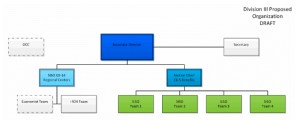
Q: What will the USCIS EB5 unit organizational chart look like once hiring is complete?
A: We can only provide a generalized org chart, without specific staffing numbers.
Non-Profit Organizations
Q: How can non-profits benefit from this program? Can they receive a direct investment from an EB-5 investor or do they need to work through a regional center?
A: An EB-5 investment must be in a for-profit entity, so a direct investment in a non-profit probably does not meet program requirements. EB-5 promoters may be able to advise on structuring specific investment opportunities, but the premise of the EB-5 program is investment in for profit activities. Job creation is the same, but premise of program is for for-profit commercial entities.

EB-5 Sunset
Q: What is the status of the EB-5 “sunset” scheduled for September 30, 2012, and how might this affect current and future applications and projects?
A:
The EB-5 Immigrant Investor Pilot Program is scheduled to end or “sunset” at the end of the current fiscal year, on September 30, 2012.
Without Congressional reauthorization, the Immigrant Investor Pilot Program will end on September 30, 2012. Congress may choose to end or extend the program.
If Congress does not reauthorize the Immigrant Investor Pilot Program, all existing regional center designations will expire automatically.
Following the sunset of the Immigrant Investor Pilot Program, USCIS will no longer possess authority to approve a regional center designation.
USCIS will continue to monitor Congressional actions pertaining to the EB-5 Immigrant Investor program, and will keep stakeholders informed as new information becomes available.

USCIS Chief Economist Speaks

I will calm down, arrange my thoughts, listen to the call five or six more times, and then attempt to say something useful about today’s Engagement with Director Mayorkas and USCIS Economists. I may even be kind enough to transcribe portions of the meeting. In the meantime, you may click here to download my recording of the call. Topics include counting jobs in real estate development projects, hotel-related job creation, and what USCIS currently does and does not want to see in business plans and economic analyses for EB-5 investment projects.

Engagement with USCIS Economists

This just in from the USCIS Office of Public Engagement:

Dear Stakeholder,

U.S. Citizenship and Immigration Services (USCIS) Director Alejandro Mayorkas invites any interested individuals to participate in a stakeholder engagement with USCIS economists on Friday, June 22, 2012 from 3:00 pm to 4:30 pm (Eastern). During the session, USCIS economists will address the agency’s review of economic methodologies used in EB-5 Immigrant Investor cases. This discussion will complement the next regularly scheduled quarterly EB-5 engagement, which will take place on July 26, 2012, by focusing on a discrete topic of inquiry.

To Submit Agenda Items
If you would like to submit agenda items and questions you must RSVP via email and attach a Word document with suggested items. All submissions should be received by the Public Engagement Division by COB Monday, June 11, 2012.

To Participate in the Session
You may attend this engagement either in person** or by teleconference. To RSVP, please email the Public Engagement Division no later than Wednesday, June 20 at Public.Engagement@uscis.dhs.gov.

If you plan to attend in person, please reference “Economist – In Person”

If you plan to attend by phone, please reference “Economist – Phone”

Following registration, we will confirm via email your in-person attendance or provide the call in details. If you are attending in person, please be sure to bring photo identification and arrive at least 15 minutes early to allow extra time to complete the security process.

**Please note that, due to seating capacity, we must limit in-person participation to the first 75 individuals who respond. Please see the attached invitation for more information.

Kind Regards,

Public Engagement Division
U.S. Citizenship and Immigration Services
http://www.uscis.gov

5/1 Stakeholder Non-Engagement

Here’s what came out of today’s hotly-anticipated in-person EB-5 stakeholder meeting at the California Service Center:

  • USCIS did not allow questions about and did not comment on the “tenant occupancy” issues.
  • USCIS did not provide a PowerPoint presentation, and did not address the stakeholder questions solicited and provided in advance of the meeting. (This may have been an error of organization, as it was announced at the beginning of the call that the panelists had prepared to answer the questions submitted in advance.)
  • Although quite a few senior staff were present at the meeting, they said little. Sasha Haskell of Service Center Operations did nearly all the talking.
  • USCIS acknowledged comments on but expressed no specific plan or goals to improve processing times.
  • USCIS acknowledged comments on but expressed no specific plan or goals to improve communication through the public engagement mailbox or through the I-924 applicant email lines.
  • USCIS acknowledged comments on but expressed no specific plan or goals to communicate expectations and standards in a more open manner.
  • USCIS provided the usual EB-5 statistics, and promised that stats will be published consistently in the future.
  • USCIS suggested that a new draft of the EB-5 policy memo will be emerging “in a few weeks,” and that the service is not currently deferring to the draft memo or implementing the “material change” guidance included.
  • USCIS confirmed that, as indicated in yesterday’s general email from the Office of Public Engagement, applicants who were issued a “tenant occupancy” RFE will be contacted with a notice that their deadline for response will be extended. However, there were no promises of forthcoming guidance related to the RFE.

I have uploaded my recording of the call, but I don’t recommend it, except for the eloquent appeals expressed by members of the EB-5 community. I approached this meeting full of sympathy for the USCIS panelists and their difficult task of engaging upset stakeholders on the complex and valid concerns that have recently arisen. But  as it turned out, I had no occasion for sympathy. Engagement hardly occurred.   After the moderator had ended the meeting, the mic caught a private comment that I interpret to be Sasha Haskell saying aside: “I think we’re doing fine, I don’t care what they say.” I’m almost certainly mishearing, but if Ms. Haskell did say that, it is consistent with the dense, unaccommodating attitude that was apparent throughout the meeting, and that bodes ill for future improvement.

I am sad. The EB-5 Regional Center program has so much promise, and yet this meeting highlighted management problems and points of confusion while giving no indication that they are being seriously addressed or will go away any time soon.  I spent the weekend at the IIUSA conference talking to people with proposals for  projects involving real job creation and significant economic development, and today’s “engagement” doesn’t leave us any closer to knowing whether it’s safe for business people to use EB-5 to support those plans.

7/03/2012 Update: USCIS has published a very informative Executive Summary covering questions not addressed at the meeting.

Forums on the Latest EB-5 Developments

It has been a wild ride these past few months for the EB-5 program – so much new information, so many open questions and pending changes. I long for the opportunity to huddle with a room full of experts and process where we are and how we can best move forward with EB-5 cases in the current environment. Fortunately we have coming up a couple excellent opportunities to do just that. Be sure to book your place before these sell out!

March 30, 2012 Portland, OR “Unlocking Foreign Capital through the Federal EB-5 Program”
Unlike many EB-5 events, this conference doesn’t focus on theory for service providers but on practical information that people actually putting together a Regional Center or EB-5 deal need to know. The roster of speakers features a long list of experts including immigration attorneys, securities attorneys, an economist, experts in escrow and marketing, and principals of several successful Regional Centers. If you are exploring the possibility of using EB-5 investment, this event is a must for you. The material that you gather from listening to the presentations and networking with the speakers and your fellow participants will save you considerable time, trouble, and expense in the long run. Why learn the hard way when you can spend one day in Portland with all the brains you could want to pick arrayed before you? And if you want to make it two days in Portland, you can stay for the seminar in EB-5 marketing being held by Brian Su on 3/31 at the same venue.

April 30-May 1, 2012 Laguna Nigel, CA “2nd Annual IIUSA EB-5 International Investment & Economic Development Forum”
The IIUSA annual meeting this year promises to be an exciting one for EB-5 practitioners. It overlaps with the 5/1 in-person EB-5 Stakeholder meeting at the California Service Center, which is sure to offer fireworks, and it will unveil two significant treats: the 2010 USCIS EB-5 training materials and 2008-2009 I-829 RFEs and Denials released to IIUSA in response to FOIA requests.

You might also consider the 4/20 AILA EB-5 event, which will provide valuable legal education and let you find out how immigration lawyers behave in the Bahamas.

Upcoming EB-5 Events

I strongly encourage participation in EB-5 educational and networking events. Especially if you’re in the process of planning or setting up a Regional Center, the information you’ll get and contacts you’ll make at one of these meetings will save you months of work and trouble. Here is a list of upcoming events, including two at which I’ll be sharing my latest EB-5 business plan secrets.

Info from 1/23 Stakeholder Engagement

The presentation from the 1/23 Stakeholder Engagement did not, this time, contain the written Q&A, so I’ve written up my notes on note-worthy points that emerged at this meeting. In case you’d like to review the entire conversation, you can download my recording of the call.

TEA Issues

  • Kevin of the Office of Policy and Strategy announced that, as indicated in the draft EB-5 guidance memo, “we are going to defer to the state agencies in regards to the geographic area of TEA designation.” However, USCIS is not yet saying whether it will allow a single census tract to qualify as a geographic area. Kevin specifically declined to state a position, saying that it “is a question that we’ll cover in the written questions/issues.”
  • Sasha Haskell said that they have consulted with the Bureau of Labor Statistics and determined that yes, it is appropriate to use newly-available five-year American Community Survey data from the U.S. Census Bureau as a base for estimates for TEA designation. (As an alternative to Census 2010 data.)
  • Question: When determining 150% of the national average for unemployment rate, which national unemployment rate should we use? Just the most current one? Sasha Haskell: In general the recommendations that we have received from the Bureau of Labor Statistics involve the analysis of 12-month or an annualized set of data. So I think in general that’s what we are looking for.

“Hold at headquarters” Issue for I-924 Regional Center applications

  • Sasha Haskell: “If I understood the question correctly, there is a concern raised about an issue that’s being examined across a number of applications and the question focuses on when there will be resolution, is that correct?… Okay, well, actually this is an issue that we’re dealing with regarding the economic analysis. We’ve had our contract economists online with us for several months now and we’ll be talking more about that in the staffing section of these presentation. They’ve been invaluable in terms of presenting their expertise in approaching these cases. This is all a growing period for us, incorporating their expertise into our adjudications. We want to make sure that we proceed very carefully. This is being discussed at the highest level in the agency. We expect to have some better clarity within the next couple of weeks on this issue. We appreciate all the patience that the applicants have displayed on this issue, but we’re really trying to proceed carefully.”
  • The leadership reiterated the hope (but not certainty) that a resolution on questions regarding the econ analysis would be reached in the next couple weeks, and that applicants would have the opportunity to provide supplemental information if needed.

Issues with I-924 applications generally

  • Common reasons for denial will be discussed at the next stakeholder meeting
  • A new I-924 Form is currently being prepared that will describe more fully what USCIS is looking for at the Regional Center application stage, and will that lay out standards for “shovel ready projects.” According to Sasha Haskell, generally “what we have found is the greater the specificity the better prepared the package is.”

Customer Service Issues

  • Email Communication: Sasha Haskell conceded that USCIS has had some growing pains with its EB-5 email-box, but assured stakeholders that the EB-5 mailbox is now administered full time by an EB-5 administrator and has a goal to respond to inquiries within 2-3 days.
  • CSC Staffing: It was reported that the CSC now has four teams of adjudicators working on EB-5 cases (versus one team in Summer 2010) and that the most recent training was conducted 12/2011.  The agency is working to incorporate economists into the review process. Each team has a supervisor and there is one supervisor in charge of work flow issues. They are trying to bundle filings for single Regional Centers for the sake of consistency while still adhering to the “first in first out” principle.
  • Processing Times: The leadership was not able to provide any current estimate on I-924 processing times, but said that time estimates will be available soon on the EB-5 page of the USCIS website.

Regional Center program sunset question

  • A stakeholder asked what procedures might be employed in the event that Congress does not extend the EB-5 Regional Center program past its current sunset date of 09/30/2012. Rachel Ellis quickly responded that this as a question that will just have to be addressed when and if it occurs, and that the Service does not have a response at this time.

Questions regarding amendments

  • Sasha Haskell and Kevin discussed at length the requirements for various types of Regional Center amendments (e.g. to industry code, geographic area, or economic impact modeling). To summarize, the applicant needs to follow I-924 relevant instructions and submit evidence that the change is warranted and appropriate, which usually involves submission of a business plan and economic analysis. Concurrent filing of an amendment and I-526 petitions dependent on approval of the amendment is not okay.

Questions regarding investment in real estate

Insights from Conversation with Director Mayorkas

And now a guest post from Joseph McCarthy, an immigration attorney and EB-5 expert who was one of the select few in-person participants at both “Conversations with the Director” in Washington DC on 1/12/2012 and 9/14/2011. I’m one of the hundreds who struggled to follow by phone what exactly was going on in the lively discussion with USCIS Director Alejandro Mayorkas, so I prevailed on Mr. McCarthy to share his first-hand experience and highlight key topics and notifications from the session. I don’t know how he found time to write this, but thank you Joe for this generous and useful report from the front. We look forward to hearing more from you.

For the second time in sixth months, USCIS Director Ali Mayorkas offered a small-audience EB-5 “conversation” as part of his ongoing outreach efforts to EB-5 stakeholders.  Much like the first event last fall, the meeting took place in an intimate conference room located within USCIS headquarters in Washington DC.  This time, however, the audience was noticeably smaller and primarily composed of veteran immigration attorneys and senior USCIS staff (accompanied by 350 passive participants who listened-in via teleconference).  The events also differed in tone and format.  The first event introduced the beginning of a new EB-5 policy memo, but the meeting as a whole might fairly be characterized as a “listening session” in which Director Mayorkas invited audience topics and concerns.  This most recent event largely focused on the content of the revised memo wherein USCIS more vocally espoused positions on policy topics.

While one could devote many pages to analyzing the new memo, perhaps the biggest conceptual change added to the most recent draft is related to what many EB-5 practitioners refer to as the “venture capital model.”  USCIS inserted several paragraphs discussing how an immigrant investor may diversify their total EB-5 investment across a portfolio of wholly-owned businesses, so long as the minimum required investment and number of jobs occur within a new commercial enterprise.  The language chosen by USCIS clearly contemplates a traditional, or non-Regional Center, investment, which quickly led to a discussion as to how the model might apply to Regional Center projects, how job creation could be verified (the ongoing debate between tracing an individual’s investment to job creation versus the creation of jobs by the commercial enterprise (8 CFR §204.6(j))), and the effect of multiple projects with varying TEA status.  While discussion was provocative, as one might anticipate, no resolution resulted.  Nonetheless, Director Mayorkas acknowledged that USCIS would further drill down into the topic and the Agency on the whole appeared receptive.

In subsequent topics, there appeared to be less agreement between the Agency and stakeholders.  In truth, not all debate may have been over closely held policy positions, but rather informed discussion of how certain hypothetical fact patterns play out given proposed ideas.  The topics varied and reached beyond the content of the memo, including:

  • Timing of job creation with respect to the two-year provisional residency period:  What is considered to be a “reasonable” period of time following the two year timeframe if the full number of jobs hasn’t been created?  USCIS appeared committed to the idea that idea of a reasonable timeframe only contemplated a “short tail” following the initial two years.
  • The extent to which USCIS should scrutinize the legitimacy of petitioner’s funds:  Again, USCIS appeared unapologetic about hyper-technical examination of source of funds, perhaps even addressing compliance with foreign laws.
  • The source and necessity of the delay in adjudications pending the resolution of unknown policy issues at USCIS headquarters:  Frustratingly, USCIS appeared unwilling to identify either the source of the delay, or the expected timeline when adjudications would renew.

At times the debate appeared to get fairly contentious; the Agency seemed highly resistant to particular stakeholder positions or interpretations of law, at times even conveying their own frustrations.  Yet overall, Director Mayorkas maintained a professional meeting posture in the spirit of fostering dialogue.  An amateur poll of attendees indicated that most participants felt encouraged and appreciative of the increased dialogue with the Agency, but reserved their final impressions until after the January 23rd quarterly stakeholder call.

Two small, yet highly important notifications were made at the meeting.  Director Mayorkas stated that three contract economists and/or business analysts (the distinction was blurred, so it was unclear) have already been hired by USCIS, and the Agency is interviewing for three more contract positions and one full time federal economist.  The Director implied that the Agency may be vetting for a corporate or securities attorney, which seemed curious, given that this is within the purview and available expertise of other federal agencies.  And certainly the question that is on every client’s mind: there currently is no available timeline for the advent of premium processing, but Director Mayorkas renewed his commitment to the idea.  Many EB-5 practitioners continue to wonder if premium processing will manifest as originally proposed – strictly for the I-924 Regional Center petitions – or if some other alternative can be explored that will result in getting money to projects faster.  My guess is that will be the topic of conversations with Mayorkas to come…

1/12 Conversation with Director Mayorkas

1/11 UPDATE: The USCIS Office of Public Engagement has emailed a revised draft of the EB-5 policy memorandum and a red line version of the memo for our review in advance of the 1/12 call with Director Mayorkas.

The USCIS Office of Public Engagement has just emailed another invitation:

Dear Stakeholder-

USCIS is pleased to invite you to the second in a series of Conversations with the Director. During these small group sessions, members of the public will have the opportunity to meet with USCIS Director Alejandro Mayorkas and senior members of the USCIS leadership team to discuss discrete policy issues.

The engagement will be held on Thursday, January 12, 2012 at 3:00 PM (EST). Director Mayorkas will provide updates on the USCIS EB-5 Immigrant Investor program, including the draft policy memorandum published on November 9, 2011.

This small group discussion will complement the existing quarterly EB-5 engagements, the next of which will take place on January 23, 2012, by allowing for a more in-depth dialogue on policy issues related to the EB-5 program.

You may attend this engagement either in person or by teleconference. However, those attending via phone will be in listen-only mode. If you wish to attend in person, attendance is limited to the first 25 people who register. The session will be intentionally limited to 25 people in order to allow for a robust, in-depth discussion. Additionally, in person participation will be limited to one person per organization or practice.

To Participate in the Session
If you wish to attend, please respond to this invitation by contacting the Office of Public Engagement at public.engagement@dhs.gov and reference the following in the subject line of your email:
“EB-5 Conversation – in person” if you wish to attend in person
“EB-5 Conversation – phone” if you plan to attend via telephone

Please include your full name and the organization you represent, if any, in the body of the email.

Kind Regards,

Office of Public Engagement
U.S. Citizenship and Immigration Services

USCIS 2012 EB-5 Events

The USCIS Office of Public Engagement has announced dates and topics for 2012 EB-5 stakeholder meetings.

Engagement Date

Engagement Format And Topic

Deadline to Submit Agenda Items

1/23/2012, 1:00PM – 4:00PM (ET) Teleconference Only Focus: EB-5 Discussion with State Governments 12/27/2011
5/1/2012, 1:00PM – 4:00PM (ET) In-Person, Teleconference & Live Web Streaming USCIS California Service Center
24000 Avila Road
Laguna Niguel, CA 92677
Focus: General EB-5 Discussion
4/1/2012
7/26/2012, 1:00PM – 4:00PM (ET) Teleconference Only Focus: Regional Center Discussion 6/25/2012
10/18/2012, 1:00PM – 4:00PM (ET) In-Person, Teleconference & Live Web StreamingTomich Center
111 Massachusetts Avenue
Washington, DC 20529
Focus: General EB-5 Discussion
9/17/2012

11/9 call with Director Mayorkas

In today’s conference call Director Mayorkas introduced  the document “A Work in Progress: Towards A New Draft Policy Memorandum Guiding EB-5 Adjudications” and fielded stakeholder questions. Many of the questions asked were irrelevant to the topic at hand so I won’t bore you with my recording, but there are a few tidbits of interest:

  • Premium Processing for EB-5: Director Mayorkas reported that the goal is to have premium processing available for initial I-924 applications only by Spring of next year. He also reiterated that the service is working hard to speed up processing times across the board for all petitions, independent of premium processing.
  • TEA Issues: Director Mayorkas said that the statement on TEA designation in the draft memo represents guidance that is effective immediately. See page 6-7 of the memo. (“….Consistent with the regulation, USCIS is to give deference to the state’s designation of the boundaries of the geographic or political subdivision that will be the targeted employment area. However, USCIS must ensure compliance with the statutory requirement that the proposed area has an unemployment rate of at least 150 percent of the national average rate.” To me this statement looks consistent with recent guidance and as if it still gives USCIS leeway to reject gerrymandering.)
  • Oversight: Director Mayorkas said that the agency is concerned about fraud and misrepresentation in EB-5 marketing and practices, and that examples should be brought to the agency’s attention.

I recommend those active and knowledgeable in the EB-5 field to review and comment on the draft memo between now and Nov 25, when the comment period closes. Those looking for practical guidance now can skip this document because the content is incomplete and will change. People also shouldn’t look to this memo for new policy. The purpose of the memo is apparently just to collect all existing EB-5 guidance in one handy location with headings — unexciting but useful and appropriate.

New USCIS Policy Guidance!

The USCIS Office of Public Engagement has just emailed an invitation to a teleconference next week 11/9 (1 pm EST) to chat with Director Mayorkas about “new USCIS policy guidance on the EB-5 Immigrant Investor Program”. Could this be the comprehensive guidance memo promised in this summer’s stakeholder meetings?  I’m so excited!  I’ll post links to the invite and the new guidance as soon as they’re posted on the USCIS website.

11/9 Update: here is the Draft Policy Memo.

Congressional Hearing on EB-5

The Judiciary Committee has posted a video recording of the Hearing on: “The Investor Visa Program: Key to Creating American Jobs” from 9/14/2011. The speakers included several praising EB-5 and several supporting the proposed start-up visa, and no negative voices.

9/15 Stakeholder Meeting

In case you missed the 9/15/11 stakeholder meeting with USCIS, you can get a copy of the presentation here, and listen to audio that I recorded today by clicking on the media player at the base of this post.

The Q&A period included a number of interesting technical points. The panelists gave advice and made statements more generously then they usually do, but keep in mind that “it depends” is probably really the correct answer to most of the questions, even if the panel was too nice this time to fall back on that response. I’d caution everyone to keep context in mind and not latch on to sentences from a conference call as the final word on any issue. For example, I doubt you can file an I-829 showing that not all EB-5 investment in a new commercial enterprise has been actually put to use in any project, with the argument “remember that call when Kevin Cummins said…” Or count on “but that one time Sasha Haskell said…” when you file an amendment to industries by “just filling out the form”  and then get an RFE pointing out that you failed to provide sufficient detail to show in verifiable detail how capital investment offerings in the requested industry will create jobs.

The presentation includes one extremely useful section: a list of the common reasons for Requests For Evidence and denials on I-924 cases. You can find this on slides 14-17 of the presentation, and I’ve also reproduced the content on my page of advice for applicants.  The list really captures the few points I see repeated over and over on RFEs.  It’s not hard to avoid an RFE; read this list and get your application right the first time.

Also note the topic of appropriate geographic areas for Regional Centers. The current I-924 form doesn’t really ask for anything on geographic area beyond a map with borders marked, and nothing prevents applicants from doing what, in fact, they do: apply for the location of their proposed project(s) plus as many surrounding counties as they dare — either because they might ever do something in those areas or (usually) to look big and assist marketing efforts. And a review of recently-approved centers shows that applicants are increasingly ambitious, with more and more full state and even multi-state centers approved. Probably this doesn’t matter since RC areas aren’t exclusive, but it isn’t what Congress had in mind when it specified that “A Regional Center may be granted jurisdiction over a limited geographic area for the purpose of concentrating pooled investment in defined economic zones.” I haven’t heard the issue raised much before, but now USCIS may be planning to crack down in this area.  According to slide 35 of the presentation:
–A Regional Center must demonstrate in the Form I-924 that its activities will focus on the requested geographic region, and not simply on isolated and unrelated areas within the region
–It may be more appropriate for the Regional Center to initially request a geographic area that is in keeping with the economic impacts of the existing project, and then subsequently file an amendment request for an expanded geographic area as the details and location of future projects become known
I’m hoping that the forth-coming revised I-924 Form will offer more guidance on appropriate geographic areas and how exactly USCIS wants applicants to demonstrate the geographic focus of their activities.

This conference call also impressed me that the leadership at least is serious about receiving feedback through the EB-5 inquiry mailbox (for case-specific issues outside the new direct email communication) and the Office of Public Engagement email address (for policy issues).  It seems that problems reported (and documented) in emails to OPE have actually been reviewed even by Director Mayorkas and used in training adjudicators, and that problems (for example in Regional Center approval letters) have actually been dealt with following emails to the EB-5 inquiry email address. And of course there’s the new direct email communication for all pending I-924 cases.

Audio recording of the 9/15 stakeholder meeting:

Conversation with Director Mayorkas

Today’s Conversation with Director Mayorkas proved to be very interesting. I liked the forum — an open conversation with 25 attendees chosen on a first-come-first-serve basis. We heard some familiar voices and familiar soapboxing, but generally the meeting format allowed for genuine discussion and for extended follow-up and interaction on important issues. Director Mayorkas once again came out looking good — knowledgeable about the program, pro-active, serious, sympathetic, and sensible. No issues were resolved in the context of this discussion, but a few noteworthy items:

  • The Director chose to make EB-5 the topic of his first “Conversation” because it is of high importance to the country and a high priority for USCIS.
  • “Premium processing” for EB-5 is a goal that will take a lot of time to implement (involving creation of new forms, OMB clearance, and a Federal Registry posting). This process is being accelerated as much as possible, and in the meantime the Director is taking steps for more immediate improvement through seeking ways to expedite processing outside of premium processing. These steps include implementing direct communication with adjudicators, hiring new staff including an economist and business analysts, and gathering input from the community on current problems for use in training adjudicators.
  • USCIS will provide a response to the AILA EB-5 Committee questions “as fast as possible,” but this will take time. The Director noted that there isn’t unanimity on these issues even among EB-5 stakeholders present.
  • USCIS is finalizing a revised “overarching” policy memo that will address issues that have arisen over previous memos and incorporate feedback and questions from stakeholders at this and future meetings. Items addressed will include the issue of child protection for EB-5 investor dependents in case I-526 has to be refiled.
  • USCIS is changing the formula for calculating the I-526 and I-829 processing times so that they better reflect actual average times (time to completion rather than just time to the adjudicator’s desk).

Most of the meeting time was given to participants and their opinions and suggestions. The group united in calling for increased consistency, and divided on whether USCIS should be more or less vigilant. Here are a few minutes of audio from what I consider a highlight of the call, including the most thrilling for-against more regulation exchange and the best organizational suggestion (from about 24 minutes in):

Fall 2011 EB-5 Events — Update

The EB-5 community has the usual lineup of events to look forward to: a USCIS stakeholder meeting, an AILA EB-5 training event for attorneys, IIUSA advocacy events, and a Brian Su marketing forum.

There’s also a surprise addition: a “Conversation with Director Mayorkas” on the EB-5 investor program, open to all by teleconference and in person to a select first-come-first serve group of 25 people.

Here are the details:

September 14, 2011, 3:30 pm ET Washington DC
A Conversation with Director Mayorkas: EB-5 Immigrant Investor Program
RSVP to USCIS to participate by teleconference or (for a lucky few) in person in Washington DC.

September 14-15, 2011 Washington DC
IIUSA EB-5 Regional Center Advocacy Conference
9/14, 1:30 pm: EB-5 Congressional Hearing with House Judiciary Committee
9/14, 5:30-8:00 pm: EB-5 Regional Center Economic Development Rooftop Reception (mixer for EB-5 stakeholders and public officials)
9/15, 7:30 am -12:00 pm: IIUSA conference on USCIS engagement and advocacy strategy

September 15, 2011, 1-4 pm ET, Washington DC
EB-5 Stakeholder Meeting with USCIS
RSVP to USCIS to participate by teleconference or in person in Washington DC

Sept. 30, 2011, 8:30 am to 5 pm ET, Orlando, FL
The National Commercial Real Estate EB-5 Finance & Investment Forum
Speakers: Brian Su, Robert Divine, Ronnie Fieldstone, Ed Beshara, Jo Ann Clarke,  Hong Yu

October 20-21, 2011, San Antonio, TX
AILA 2011 Fall EB-5 CLE Conference
EB-5 Investors & Regional Centers-Navigating Through New Challenges and Building a Sound Practice

Conversation with Director Mayorkas and Processing Changes Update

Today I listened in on the first teleconference in the “Conversations with the Director” series focusing on Opportunities for Business Entrepreneurs within the U.S. Immigration System. Director Mayorkas participated the call, along with representatives from the Office of Policy and Strategy, Service Center Operations, and Office of Chief Counsel. The call included almost two hours of public Q&A, largely focusing on the L-1, E-2, and H1-b programs. It proved mainly a forum for the public to air concerns about adjudication problems, and for the leadership to listen sympathetically and say they’d look into it. A few points of interest for the EB-5 community:

Status of EB-5 Processing Changes. Director Mayorkas provided the following update:

  • USCIS has finished reviewing 177 pages of comments on the proposed processing changes
  • USCIS will publish a final reformed process “in the next few weeks”
  • In September, USCIS will implement one of the proposed changes: direct communication with the adjudicative team.
  • USCIS is moving forward “as quickly as possible” on implementing premium processing, but this will take time. USCIS is currently revising its proposal, and there will also need to be  significant operational steps including revising the forms and Federal Register changes before premium processing will be a reality.

Adjudicator Training. The leadership is undertaking adjudicator training in an attempt to address problems and inconsistencies, and several callers were encouraged to send their problem RFEs to the Office of Public Engagement (public.engagement@dhs.gov) for use in the training.

6/30 EB-5 Stakeholders Meeting

The printed materials from the 6/30 EB-5 Stakeholder’s Meeting were re-posted yesterday on the USCIS website with no revision. Click here for the EB-5 Presentation 063011 Slides and June 2011 Stakeholder Meeting Q&A. I’m also posting my recording of the second half of the meeting:

Up-coming EB-5 Events

A review of up-coming events for the EB-5 community to keep in mind.

June 30, 1 pm EST: USCIS EB-5 Quarterly Stakeholder Meeting  (teleconference rescheduled from 6/16)  RSVP to USCIS. Free.

July 6, 3 pm EST: U.S. Investment Visas and Green Cards for Foreign Nationals. Webinar series by IIUSA and the Alliance of Business Immigration Lawyers. Topic: EB-5 regional center applications and project preapproval petition. Presenters: Laura Danielson, Bryan Funai, H. Ronald Klasko, Steve Trow. Price: $89.

July 31: Everyone’s favorite EB-5 business plan writer gets married.

August 11-12: IIUSA EB-5 International Investment & Economic Development Forum in Seattle, WA. An opportunity for networking among Regional Centers, prospective investors and agents, and attorneys. Also includes educational sessions with CLE credit offered. Exhibit spaces are available.

August 16, 3 pm EST: U.S. Investment Visas and Green Cards for Foreign Nationals. Webinar series by IIUSA and the Alliance of Business Immigration Lawyers. Topic: How to successfully navigate the back end of the EB-5 process for both individual investors and regional centers. Presenters: Steven Clark, H. Ronald Klasko, Robert Loughran, Stephen Yale-Loehr. Price: $89.

September 14-15: IIUSA EB-5 Regional Center Advocacy Conference in Washington DC. Includes educational sessions, opportunities to exhibit and network, and advocacy activities.

September 15: USCIS Quarterly EB-5 Stakeholder Meeting  (teleconference and in person in Washington DC)  RSVP to USCIS. Free.