EB-5 Statistics 6/16/2010

The following statistics related to the EB-5 program were reported by USCIS at the EB-5 stakeholder meeting on 6/16/2010:

  • There are currently 94 approved Regional Centers (RCs), operating in 34 states, inclusive of the District of Columbia and Guam.
  • Approximately 90-95% of the individual Form I-526 petitions filed each year are filed by Alien Investors who are investing in RC-affiliated commercial enterprises.
  • There are approximately 65 RC Proposals pending with USCIS.

Statistics for EB-5 visas reflect the increasing popularity of the program, and a relatively high rate of approval.

Individual EB-5 Petition Statistics Oct – May FY 2010
Receipts Approvals Denials
Form I-526 Petition 1,100 955 113
Form I-829 Petition 438 188 33
Individual EB-5 Petition Statistics FY 2009
Receipts Approvals Denials
Form I-526 Petition 1,028 966 163
Form I-829 Petition 437 335 55
EB-5 Visa Usage
Fiscal Year Total EB-5 Visas Issued
FY10 (Oct-May) 1,494 (32% I-485, 68% DS-230)
FY09 4,218 (24% I-485, 76% DS-230)
FY08 1,360
FY07 806
FY06 774

EB-5 Inquiries

The USCIS EB-5 webpage now has a link for EB-5 Inquiries under the link for the list of Regional Centers.  The content (contact email address and list of acceptable inquiries) is familiar —  nearly identical for example to the handout distributed by USCIS at the March 16th EB-5 forum at the California Service Center.

The list of acceptable inquiries is surprisingly broad, even including “to request for expedited processing of already filed I-526s, I-829s, or RC Proposals” and “to request for Regional Center Proposal filing instructions, procedures, and Regional Center general information documents.”

RC Name Changes

The USCIS list of approved Regional Centers has already been updated again, as of 6/10/2010, this time with a few name changes:

  • EB-5 America is now DC Regional Center.
  • Invest Idaho Innovation Regional Center has dropped “Innovation” from its title.

EB-5 Stakeholder Meeting

The USCIS Office of Public Engagement has issued its invitation to an EB-5 stakeholder meeting on June 16. Interested parties may participate by teleconference or in person in Washington D.C. Topics for discussion can be submitted up to June 7. Please see the USCIS notice for details and information about how to RSVP.

“Pay to stay” news story

IIUSA brought to my attention this useful article published a couple weeks ago, which discusses the EB-5 program in some depth with special reference to Regional Centers in California. The article also cites these important-to-keep-in-mind stats on the breakdown of EB-5 visas issued in 2009:

    China: 1,979
    South Korea: 903
    Britain: 326
    Canada: 85
    Japan: 84
    India: 72
    Russia: 60
    Netherlands: 38
    Mexico: 33
    South Africa: 31

See the U.S. State Department website for complete EB-5 visa statistics.

CNBC on EB-5

CNBC is talking about EB-5 today. The report provides a fairly comprehensive overview of the program, and features a stand-alone EB-5 example. They kindly don’t go into much detail comparing EB-5 to Canada’s smooth “buy a green card” program.

Interesting new AAO decision

The most recently published EB-5 related Administrative Appeals Office decision (Oct. 26, 2009) is an illuminating read. The decision is a denial of a stand-alone EB-5 petition filed in 2008, and includes opinions that will interest professionals related to the “in process of investing” issue, how funds must be used in the new commercial enterprise, what terms make a “buy-back” agreement unacceptable, the “engaged in management” requirement (with specific reference to LLC membership), the “material change” hot button, and finally, the vital importance of the business plan. The decision also lives up to the USICS standard of entertainment with its apparently random black-outs of text here and there while leaving me with the names of most of the entities involved.

The definition of a business plan in Matter of Ho, you may be interested to know, was cited in 20 of the 40 most recently published AAO decisions (aka denials), from January to October 2009. By Oct. 26 the judge seems to be frustrated and goes on for paragraphs emphasizing the importance of business plans and even implying that the petitioner might have gotten away with having only six full time employees so far if only she had submitted that comprehensive business plan.

Counsel then states that the petitioner “may” submit a comprehensive business plan, implying that the submission of a comprehensive business plan is optional. Counsel then asserts that “the business plan need only indicate the approximate dates (e.g. through pro-forma income statements) during the following two years when the employees will be hired.” As GPP I1 is a “full-functioning business,” counsel states that it need not “absolutely” submit a comprehensive business plan. Rather, counsel concludes that a comprehensive business plans is more appropriate for businesses not yet in operation. Counsel states that GPP I1 “does not exist merely in vapor” and, thus, a comprehensive business plan is not required. The petitioner submits an employee list showing six active full-time employees and seven active part-time employees, ten Forms 1-9 and payroll records.

The petitioner has now demonstrated that the new commercial enterprise employs six full-time qualifying employees. The regulation at 8 C.F.R. 5 204.6(j)(4)(i), however, explicitly states that a petitioner “must” submit evidence of ten employees ” or ” a comprehensive business plan. As the petitioner has not documented ten employees, she must provide a comprehensive business plan. We are not persuaded that the comprehensive business plan requirement may be waived for operational companies. While GPP I1 does not exist in a “vapor” we will not presume that every operational company currently operating with fewer than ten employees will create at least 10 full-time jobs within two years. It is the petitioner’s burden to demonstrate the likelihood of this job creation through the submission of a comprehensive business plan. Moreover, pro-foma income statements cannot take the place of a comprehensive business plan. Such statements, while they may show an increase in projected wages, do not provide the information specified in Matter of Ho at 213. Specifically, income statements do not explain the business’s staffing requirements and contain a timetable for hiring, as well as job descriptions for all positions. In light of the above, the petitioner has not established that her investment will generate the necessary full-time employment.
CSC Processing Times

The estimated processing time for an I-526 petition has been extended from 5 months to 6 months as of the 5/17/2010 publication of USCIS Processing Times for the California Service Center. The I-428 and I-829 petitions still show a processing timeframe of 6 months.

REPAIR Proposal

Senators Reid, Durbin, Schumer, Leahy, Feinstein, and Menendez have announced a “conceptual proposal for immigration reform” including the recommendation that “The EB-5 program will be made permanent and adapted to increase foreign investment into the United States” (Section VI). The wide-ranging proposal calls for measures to strengthen border security and enforcement, strengthen employment verification, continue support for employment-based immigration policy, and implement a “tough but fair path to legalization for those already here.”

The press announcement does not detail how the EB-5 program should be “adapted” to increase foreign investment; the AILA summary of the proposal interprets this as “technical fixes.” The proposal if implemented would likely have a mixed effect on EB-5. On the one hand making the program permanent would give needed stability (the regional center pilot program is set to sunset again on September 30, 2012). On the other hand the proposal’s recommendation to expand access to high skilled immigration options and eliminate per-country employment immigration caps would likely reduce the market for EB-5, since it would put H1-B visas back within the reach of American-educated children of wealthy parents.

CFIG Regional Center expanded

Chicagoland Foreign Investment Group (CFIG) Regional Center, the first Regional Center in Illinois, has been expanded to include the Indiana counties of Jasper, Lake, La Porte, Newton and Porter and the Wisconsin counties of Adams, Columbia, Crawford, Dane, Grant, Green, Iowa, Jefferson, Juneau, Lafayette, Rock and Sauk.
The list of approved industries has also been expanded to: Accommodations and Food Services, Agriculture, Forestry, Fishing and Hunting, Educational Services, Arts, Entertainment and Recreation, Manufacturing, Healthcare and Social Assistance, Transportation, Retail Trade, and Utilities.

New California Regional Center

The USCIS list of approved regional centers is now updated as of 4/13, and one new Regional Center has been added: US Employment Development Lending Center, LLC, approved for the State of California and the following industry clusters: Construction, Professional Services, Other Services, Agriculture, Manufacturing, Information Services and Health Services. I am impressed that a Florida-based applicant involved in REO wholesale (John Shen of Dobty Group) was able to receive designation for the whole state of California and for industries as flexibly defined as “other services.” John Shen is also associated with International Project Consulting Group, which offers “one-stop marketing support” to Regional Centers.

Update: The contact info for this new regional center is changed as of the 4/21 USCIS list to one Leo Zhou based in Long Beach, CA.

EB-5 Seminar Los Angeles

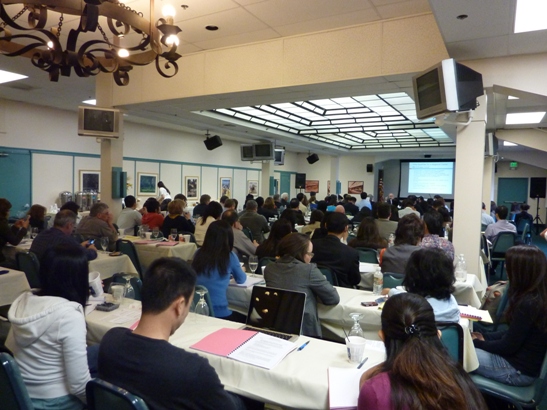
The LA County Bar Association hosted an excellent EB-5 seminar on March 20th, with featured speakers including immigration attorneys Lincoln Stone, Linda Lau, and Mark Ivener, and corporate attorney Jor Law. Blake Goto and Sheila Fisher from the USCIS California Service Center were on hand for a Q&A period, and I presented a session on business plans for EB-5 purposes. The PowerPoint and handout from my presentation are available.

Report on CSC EB-5 Forum


The EB-5 Forum hosted at the California Service Center on 3/16/2010 was well attended and very interesting. As attendees we were able to interact directly with the people in charge of EB-5 adjudications, and I was gratified in the Q&A time to hear the importance of business plans repeatedly emphasized. I have prepared notes on the discussion, and copied the handout distributed at the event.

EB-5 Forum to be Held at CSC on 3/16/10

According to the AILA website, the USCIS California Service Center (CSC) has scheduled an EB-5 forum on March 16, 2010 from 1:00pm to 3:00pm. The CSC will be providing brief EB-5 updates and open the floor for an informal Q&A with a panel of EB-5 managers, supervisors, and service center counsel. The event is open to the public.

StartUp Visa Act of 2010

Today Senators John Kerry and Richard Lugar introduced the “StartUp Visa Act of 2010,” which proposes a new EB-6 category visa for immigrant entrepreneurs.

Read more of this post

New Book on EB-5

As of January 26, 2010, one can purchase or kindle Green Card via the Red Carpet: A Comprehensive Guide to Immigrating to the U.S. by Investing in an EB-5 Regional Center by Stephen Parnell and Andrew Bartlett. The book works hard for its “comprehensive” title, judging from the table of contents viewable on amazon, with sections covering reasons to immigrate to the US, all immigrant and non-immigrant visa categories, the history and types of EB-5, issues to consider in evaluating regional centers, the EB-5 immigration process, and relocation advice. The authors also have a website www.WhichEB5.com, which offers free consulting to potential EB-5 investors and fee-based promotion to Regional Centers. The website includes a lot of text on EB-5 topics and rather little useful information, but maybe because they want me to buy the book. It’s difficult to provide current and correct information for a field as volatile as EB-5, and the website falters a bit in this area, claiming a “green card in six months” timeline for example and reporting the number of regional centers variously as about 30 and about 50 (in fact now over 80). If I were a lawyer or Regional Center I might still buy the book though for the final relocation section, which appears to offer useful practical advice for those time-consuming “how do I make it in the USA” questions from taxation to credit to education to health care that investors do ask.

USCIS breaks the law?

Wow, this is interesting. “What Happens When USCIS Breaks the Law?” asks the AILA Leadership Blog (by the American Immigration Law Association)  in a strongly-worded post alleging that USCIS took ignoring Federal Law to a new level with its 12-11-2009 Neufield memo on the EB-5 program, a memo that not only changes the law but “essentially makes the job creation program unworkable,” according to the post.  AILA is drafting a position paper specifying what’s wrong with the memo and is urging additional action to save the EB-5 and H-1B programs from USCIS and its “bizarre notion of what they think the law should be, not what it really is.” The comments on this post are also worth reading.

More Mainland China Investors

Ivener & Fullmer LLP has issued a press release on the EB-5 program that includes this interesting statistic: “According to Beijing Entry and Exit Service Association, applicants for the [EB-5] program doubled at the end of last year compared to the previous year, with the numbers jumping from about 500 in 2008 to 1000 in 2009.”

EB-5 Program in the News

The Washington Post and Forbes (followed by ABC Money) came out this weekend with articles on the EB-5 program: Immigrants invest in U.S. businesses in exchange for visas and A Precious Capital Source For Small Biz. Though Forbes refers to EB-5 as “a quick-and-dirty-U.S.visa” and notes complaints that “EB-5 runs about as efficiently as the DMV,” the articles are mainly positive and include favorable interviews with investors, regional centers, and elected officials. I was interested to see confirmation of the statistic that 70 percent of immigrants granted investor visas in fiscal 2009 were from China or South Korea.

EB-5 Q&A with USCIS

USCIS has posted Q&A from the December 14, 2009 EB-5 conference call on their website. The questions (posed by the AILA EB-5 committee and Invest in the USA) were excellent and the USCIS answers mostly predictable (we can’t answer that question so we’ll answer a different one; we’re not going to tell you because there’s a memo on that subject forthcoming at an unknown date; we have an inapplicable precedent to refer you to; we have no general guidelines only case by case reactions). At least USCIS had prepared answers this time and some valuable information was shared.  Of particular interest to me:

  • There were “less than 50” regional center applications pending at USCIS as of 12/14/09.
  • USCIS highlighted the importance of business plans. The movement of funds from one job-creating business to another is acceptable in principle with no need to amend the I-526 petition provided that the approved I-526 business plan allows for such movement. Job creation based on capital infusion can be demonstrated at the I-829 stage simply by referring to economic data in support of the I-526 petition provided that “the infusion of capital occurs according to the approved business plan and economic analysis, and the capital investment scheme comes to fruition in the manner outlined in the business plan.”
  • USCIS made a strong statement about TEA designation, saying that they consider unacceptable “state-sanctioned attempts to ‘gerrymander’ a finding of high unemployment that is not in accordance with the statutory requirement, through the cobbling together of various portions of political subdivisions so that an investment in a commercial enterprise in a location that is not a high unemployment area would ultimately qualify as one.” While recognizing that states have the authority to designate TEA, USCIS emphasized that this designation must be in accordance with the statutory requirements for TEA: that the area is rural or has an unemployment rate 150% of the national average. Historically USCIS has accepted some creative TEA designations by states, but it seems that this will no longer be the case.
  • USCIS emphasized that Regional Centers can only get credit for indirect jobs/impacts created within the geographic boundaries of the Regional Center.
  • A project that has received traditional EB-5 investment may apply for designation as a regional center, so long as the economic analysis doesn’t “double-count” the jobs already allocated to the traditional EB-5 investors.
  • USCIS confirmed that an investor can be counted as investing in a “new” commercial enterprise so long as that enterprise was established after 11/29/1990, and that such an investment will qualify without the need to show that the investor was involved in establishing, expanding, or reorganizing the business.
  • The Q&A repeatedly cites this newly released document: Adjudication Field Manual Update AD09-38. Click here for the full text Adjudicator’s Field Manual.