A reader asked me this question a couple weeks ago: Is EB-5 still a choice? Can it be a good option today for project companies or prospective immigrants? The answer: yes, though it’s complicated. In 2018, we felt the sting of legislative, regulatory, and policy uncertainty, and the pressure of limited visa numbers and associated wait times. Limited visas mean that EB-5 is no longer a good choice for the ones who used it most in recent years: China-born immigrants and mega-projects. EB-5 can still work well today on a small scale – for immigrants from not-backlogged countries (or not in a hurry), and for projects that don’t rely on massive EB-5 raises. Uncertainty remains an issue, as regional center program authorization depends on Washington’s ability to pass funding bills, and basic EB-5 program terms are subject to change from new regulations and policy. This post looks back at major developments reported by this blog over the past year.
Regional Center Program Authorization
EB-5 itself is permanent, but the regional center program was established in 1992 with an initial five-year term, and has required reauthorization since then. Authorization has typically been attached to appropriations bills — a blessing when the appropriations process goes smoothly, and a curse when it doesn’t. Congress did not intend to harm the RC program in 2018, but drama over government funding meant that the RC program faced five sunsets this year, and temporarily lost authorization twice: with the 3-day government shutdown in January 2018, and with the current shutdown since December 22. The choppy history of RC program authorization is really just the dismal history of appropriations bills and Washington’s struggle to agree on government funding.
The regional center program needs permanent or at least long-term authorization to put it on a stable footing, no longer vulnerable to every unrelated funding dispute over health care or abortion or The Wall or whatever. IIUSA has been advocating this since 2005, but without significant success so far. There was one stab at EB-5 legislation in 2018 – the “EB-5 Reform Act” negotiated behind closed doors by Grassley, Goodlatte, Cornyn, and Flake, and revealed in draft form to the industry in March 2018. I saw the bill as flawed and pandering to New York City interests, but reportedly the NYC interests didn’t like it either and prevented its inclusion in the March appropriations act. The EB-5 Reform Act would’ve given the RC program a welcome five-year authorization, but also made the program broadly unusable. We missed that opportunity and dodged that bullet. Since then, I’ve heard no report that anyone in Congress is working on EB-5 legislation. When the Senate Judiciary Committee held a hearing on EB-5 in June, most senators ignored EB-5 and just talked about the southern border. Senator Grassley, previously a force behind EB-5 legislation, turned his energy to writing letters urging action on regulations. At least until border security and DACA are out of the way, we apparently can’t depend on Congress to go beyond the minimum for EB-5: to keep regional center program authorization in the funding bills. (1/3/2019 Update: IIUSA says in its Year in Review post that “We are working productively with the EB-5 Investment Coalition (EB5IC) to further a true ‘industry bill’ that, when introduced in the 116th Congress, will provide for a full five-year reauthorization of the EB-5 Regional Center Program.”)
Changes to EB-5 Requirements
We spent all of 2018 thinking that DHS was just about to finalize new regulations increasing the EB-5 minimum investment amount and changing TEA rules. The OMB Unified Agenda anticipated a Final Rule by 02/00/2018, and then by 11/00/2018, but neither of those targets were met. USCIS has had since April 2017 to consider public comments on the regulation and come up with a final rule, but the task is complicated. The public generally didn’t like the draft rule, and DHS has had staff turn-over in nearly every position responsible for the EB-5 regulation.
USCIS did make four updates in 2018 to the EB-5 section of the USCIS Policy Manual. The updates (1) reaffirmed that USCIS provides documentation of CPR status to those with pending I-829, (2) rescinded previous guidance on tenant occupancy methodology, (3) updated guidance on regional center geographic area requirements, and (4) clarified policy on debt arrangements. USCIS did not issue or promise any new guidance on the most pressing policy grey area: redeployment.
EB-5 Visa Usage and Petition Volume
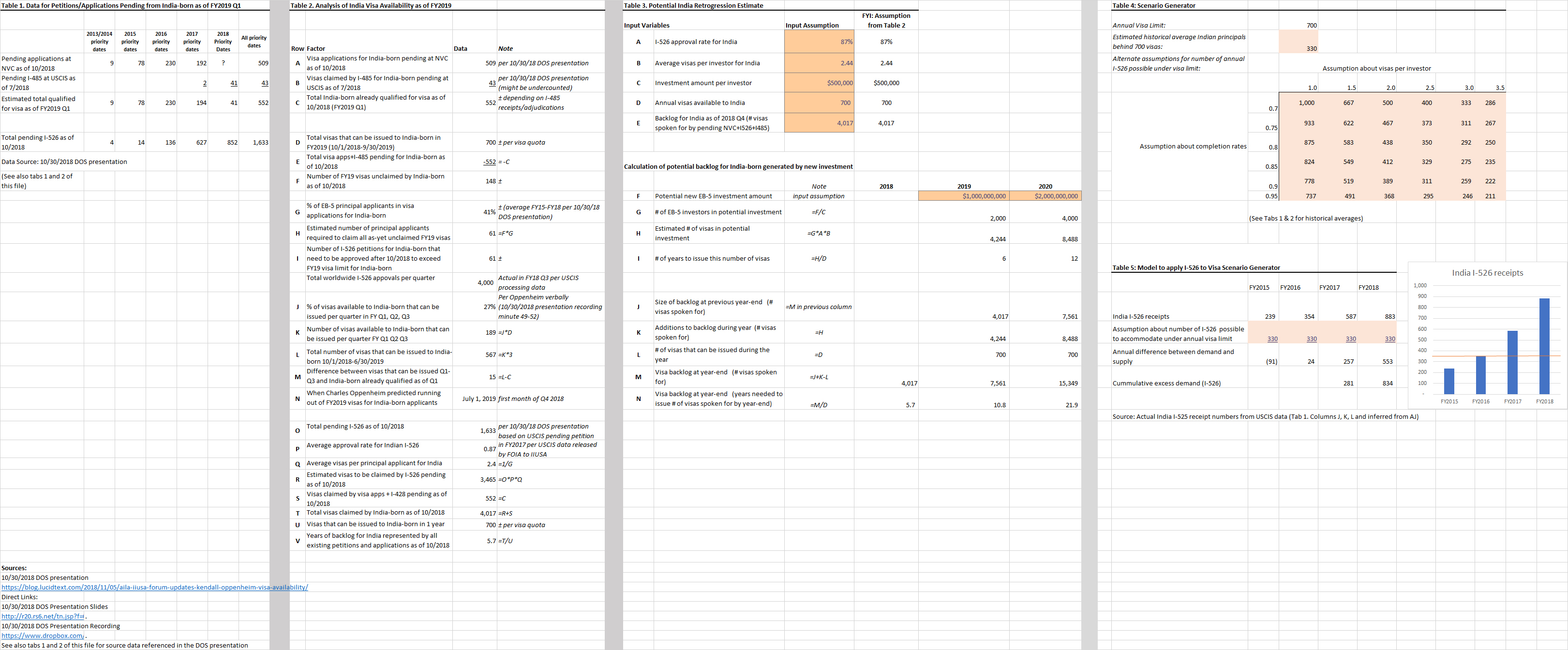
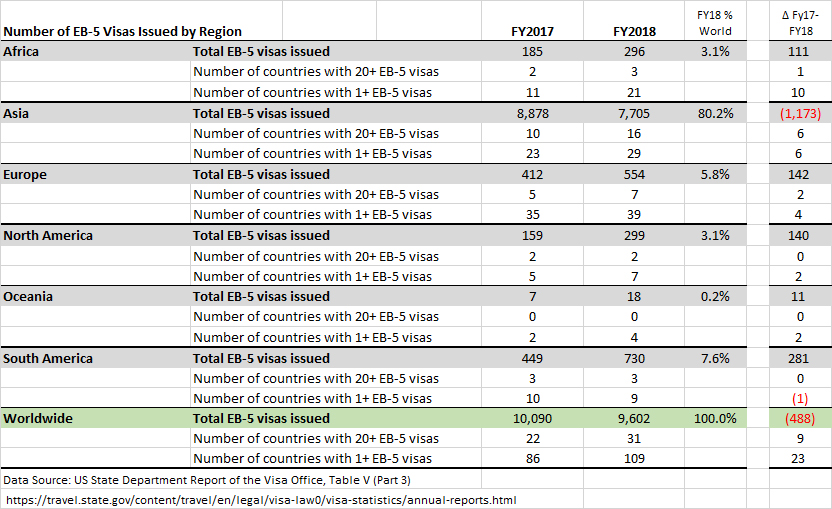
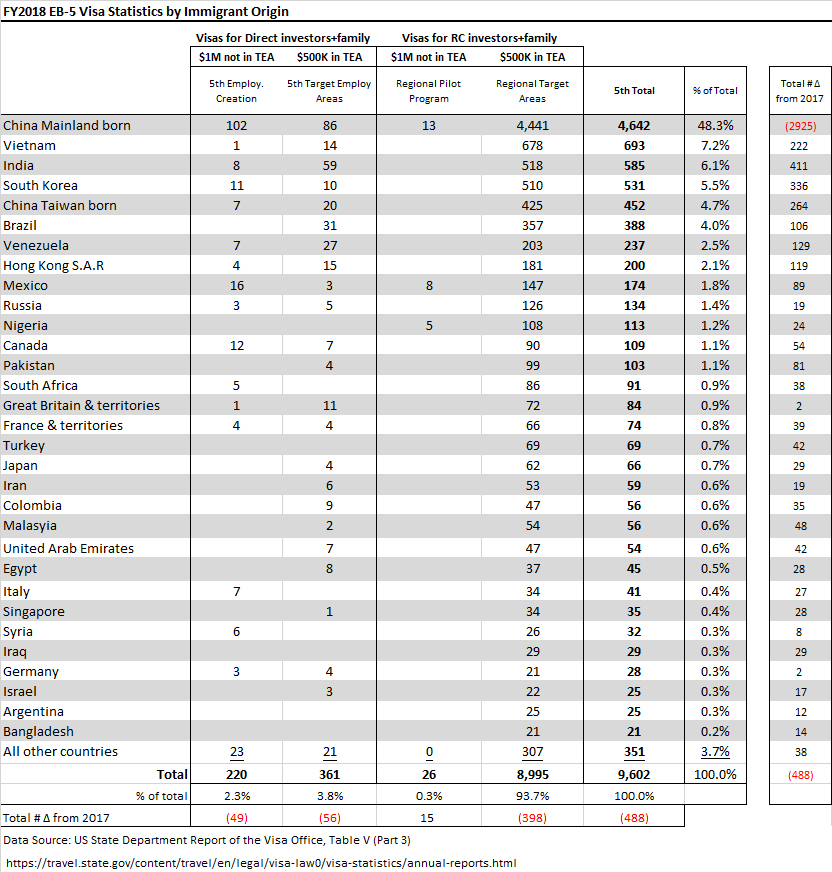
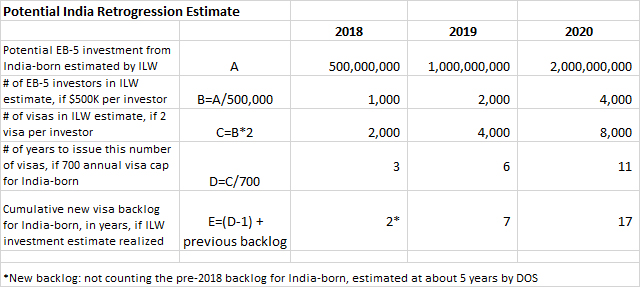
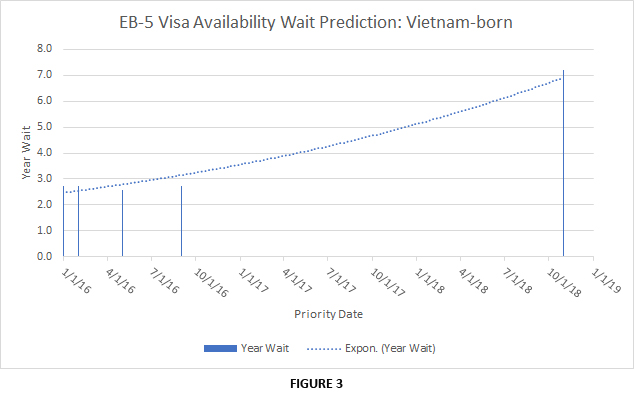
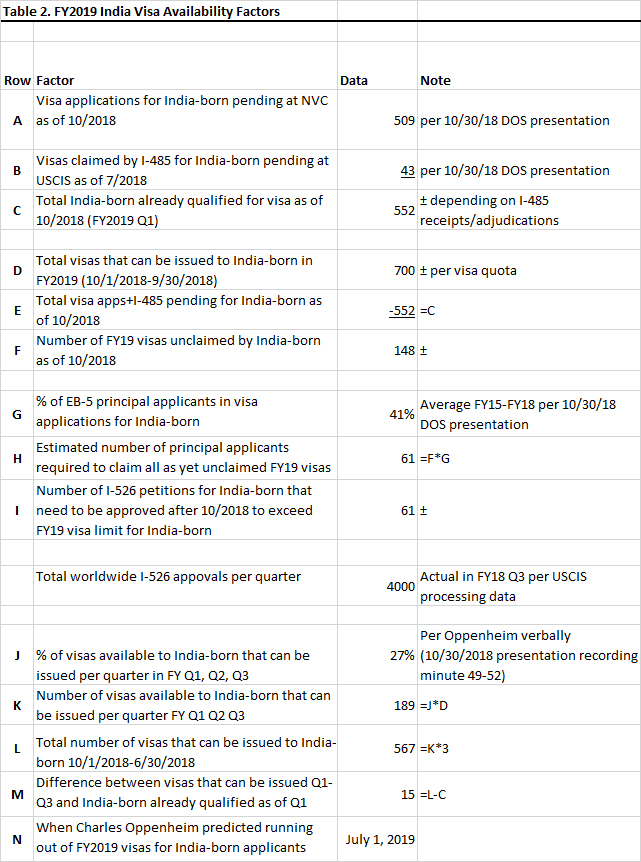
Some of us have been talking about EB-5 visa numbers and trying to crunch numbers for wait time estimates since 2015, but 2018 was the year when everyone joined the conversation. In 2018, Department of State lengthened its estimate for the EB-5 visa wait for China-born investors, gave a cut-off date to Vietnam for the first time, and predicted oversubscription for India. EB-5 visa availability and wait time estimates went from being a fringe topic for killjoys with confusing spreadsheets to being a primary and widely-discussed factor in marketing strategy, investment decisions, and litigation.
The best attempt in 2018 to alleviate the visa number problem came from a lawsuit pointing out Congress’s expressed original intent to grant 10,000 visas to EB-5 investors, and the error of applying that limit to investors plus family members. So far the judge denied a preliminary injunction in the case, but the plaintiffs are continuing to pursue the matter. Meanwhile, proposed legislation suggested changes to visa number allocations, but not changes that benefited EB-5. Fortunately those proposals did not become law.
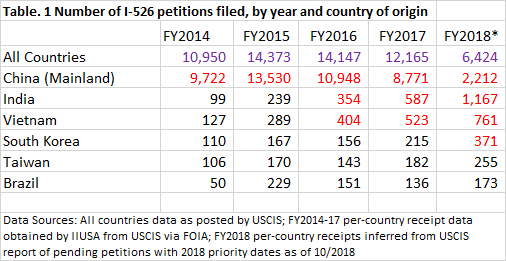
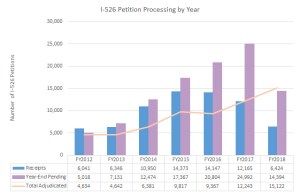
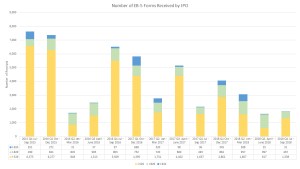
Demand for EB-5 continued fairly strong in 2018, with about 4,000 I-526 filed from January to October. Of these, about 1,000 were filed in a surge in September 2018, in advance of possible changes/sunset date, and over 850 were filed by people born in India. Overall, I-526 receipts were well below totals from previous years, and should continue to fall as people adjust to the hard limit imposed by the 10,000 annual EB-5 visa quota for investors plus family members.
Trends at IPO
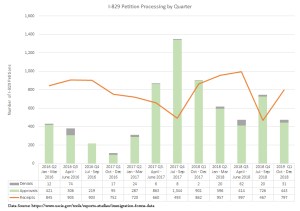
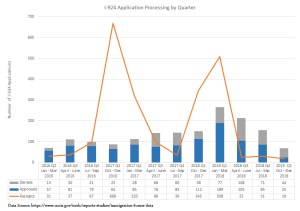
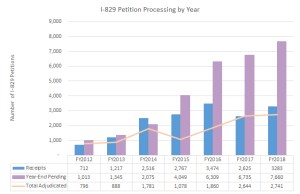
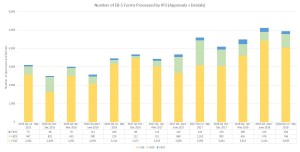
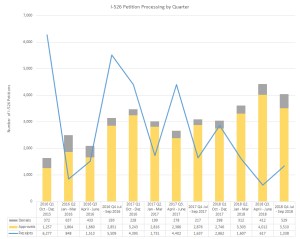
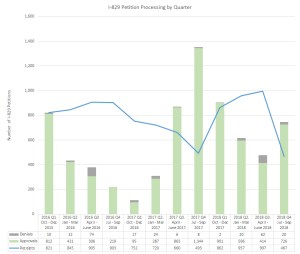
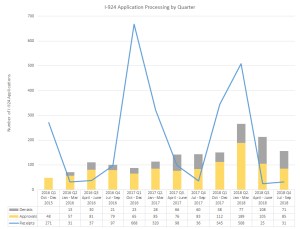
In 2018, IPO got a new chief and (I think?) several new division chiefs, issued four policy manual updates, held no stakeholder engagements until three appearances in November, significantly improved I-526 processing volume and times, dropped the ball on I-829, further confused processing times reports, issued many RFEs on issues related to the “at risk” requirement, and terminated 138 regional centers (mostly for inactivity or not filing Form I-924A).
EB-5 on the Ground
In 2018 I wrote EB-5 business plans for new projects in hospitality, multi-family, retail, assisted living, manufacturing, distribution, and storage, as well as E-2 work. I enjoyed hearing good news from past clients with approved petitions, and tried to help clients struggling with timing issues, redeployment challenges, policy changes, and political uncertainty. This blog had 49 new posts in 2018, and received 407,967 views from 121,349 visitors. Of these visitors, 56 made a contribution to support the blog. I appreciate the people who work hard to make EB-5 work, and especially the clients who have let me be a part of the process. We shall see what 2019 brings.
Regional Center List Updates
Additions to the USCIS Regional Center List, 09/11/18 to 12/31/18
- Ameri-Link Midwest Regional Center (Illinois, Indiana)
- Ameri-Link Ohio Regional Center, LLC (Ohio)
- American Equity Fund Texas, LLC (Texas)
- BC Central Florida Regional Center LLC (Florida)
- Brilliant EB-5 Regional Center, LLC (Nevada)
- FCA South Carolina Regional Center, LLC (South Carolina): www.fcaeb5.com
- Los Angeles International Regional Center, LLC (California)
- Mayaguez Regional Center, LLC (Puerto Rico)
- National EB-5 Wealth Center, LLC (Texas): www.eb5wealthcenter.com
- Southern California EB-5 Fund, LLC (California)
- York Resources RC Funding, LLC (Connecticut, New Jersey, New York)
Renamed:
- Smith Western Regional Center (former name Western Pacific Regional Center) (California, Oregon, Washington)
- Native American Regional Center, LLC FKA Native American EB-5 Corporation (Illinois, Indiana)
Removed from the approved list, but not listed as terminated:
- US Access Florida Regional Center, LLC (Florida)
New Terminations:
- Civitas Miami Regional Center, LLC (Florida) Terminated 9/6/2018
- Live in America – Colorado Regional Center LLC (Colorado) Terminated 9/7/2018
- Civitas Great Plains Regional Center (Kansas, Missouri, Oklahoma) Terminated 9/12/2018
- Encore Colorado RC, LLC (Colorado) Terminated 9/24/2018
- Northern Mississippi Regional Center, LLC (Arkansas, Mississippi, Tennessee) Terminated 9/7/2018
- Civitas Alabama Regional Center (Alabama) Terminated 9/6/2018
- Civitas Michigan Regional Center (Michigan) Terminated 9/6/2018
- USHoldings Regional Center (Georgia, South Carolina) Terminated 9/24/2018
- Civitas Laredo Regional Center, LLC (Texas) Terminated 9/6/2018
- Civitas Atlanta Regional Center (Georgia) Terminated 9/6/2018
- Civitas Rio Grande Regional Center (Texas) Terminated 9/10/2018
- US Freedom Capital-Texas, LLC (Texas) Terminated 9/18/2018
- E Development Corporation dba EDC (Island of Guam) Terminated 10/15/2018
- Civitas Washington D.C. Regional Center (District of Columbia, Maryland, Virginia) Terminated 9/5/2018
- Civitas Illinois Regional Center (Illinois) Terminated 9/5/2018
- Central Arizona Regional Center (Arizona) Terminated 12/19/2018
- American Dream Fund San Francisco Regional Center, LLC (California) Terminated 10/3/2018
- Civitas Louisiana Regional Center (Louisiana) Terminated 9/11/2018
- Golden State Economic Development Fund, LLC (California) Terminated 12/6/2018
- Carolina EB-5 RTP Regional Center, LLC (North Carolina) Terminated 12/20/2018
- San Diego Regional Investment Center, LLC (California) Terminated 11/16/2018
- EB5 Affiliate Network Washington, D.C. Regional Center, LLC (District of Columbia, Maryland, Virginia, West Virginia) Terminated 9/13/2018
- Mag Ventures 1, LLC (Ohio) Terminated 9/11/2018









 EB-5 Updates