EB-5 Timing Issues: Not a Fast Track
January 12, 2016 13 Comments
October 2017 Update: I now have a new post specific to the process and wait between I-526 and the conditional green card.
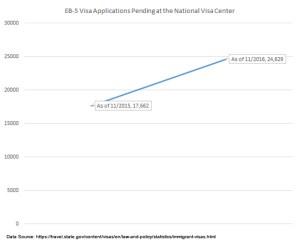
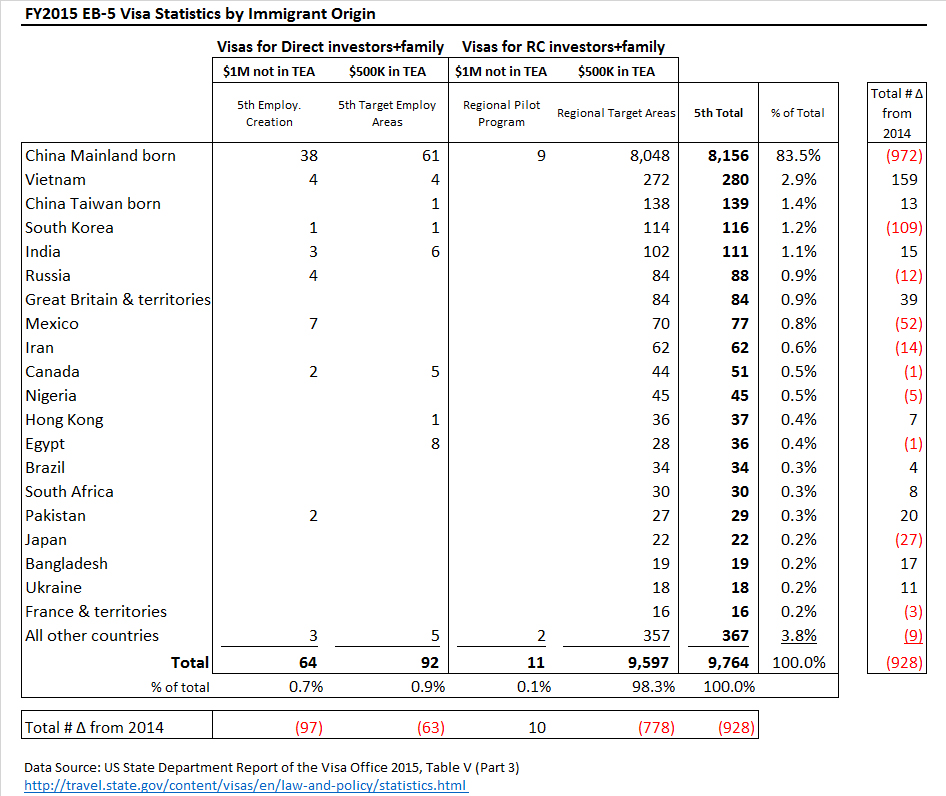
May 2017 Update: I’m demoting my original post from January 2016 to an attachment, as people keep consulting the post but all the numbers I used to try calculating timing have changed significantly since then. It’s hard to answer the question “how long will the EB-5 process take.” It depends on where the investor was born, when the investor filed I-526 relative to filing surges, how many petitions and applications get denied or abandoned, how processing times change, how demand changes, and whether Congress agrees to make changes to visa numbers or allocations or the filing process. The bad news, in short, is that the sheer number of people already in line for an EB-5 visa, plus the annual visa quota and per-country limitation, currently means that new China-born investors could be waiting a decade just to get a visa number for conditional permanent residence. Just a few years ago, companies could think in terms of a 5-year exit strategy to comfortably cover EB-5 investors through I-829 approval, but that could look more like 15-year exit strategies in today’s bad-case scenario. But the bad case won’t be reality for everyone — or maybe no one, if legislative proposals are enacted. Or the bad case could get even worse (as it did since I first wrote this post in October 2016, when the visa backlog looked about six years long), if surges in I-526 petition filing continue without other changes. Here is a spreadsheet with my ongoing attempt to calculate the backlog effect. Note that this simplistic approach does not model the influence of filing surges that create different time horizons for investors from different periods. And of course, it doesn’t reflect the fact that new legislation could change the picture entirely. For background on visa timing — the main wild card in the EB-5 process — see Robert Divine’s article The Realities and Implications of Chinese EB-5 Investors’ Wait for Visa Numbers (January 4, 2016).
Stages in the EB-5 Process
| STAGE | CONSIDERATIONS | ESTIMATED DURATION |
| (A) Planning, paperwork, investment | Must commit investment and meet other requirements before filing I-526 | |
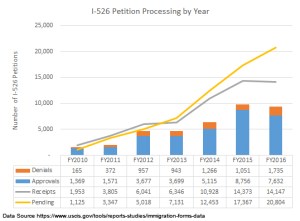
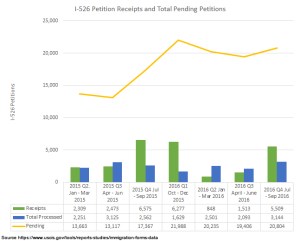
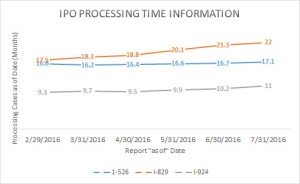
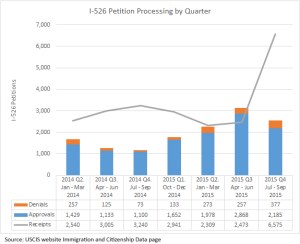
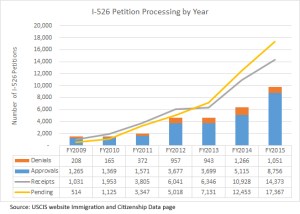
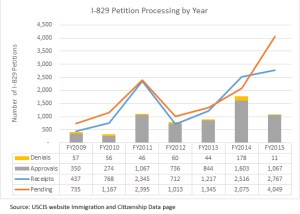
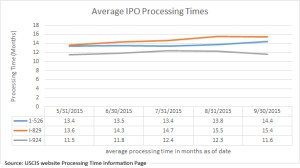
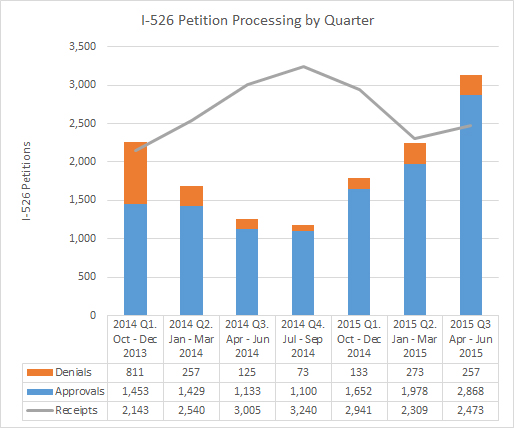
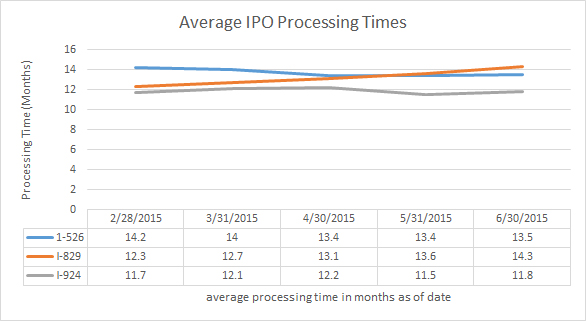
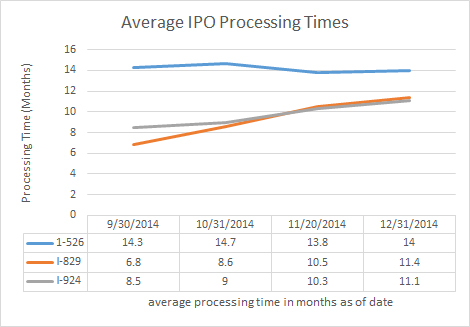
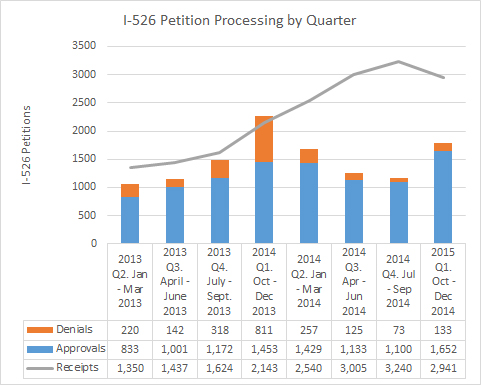
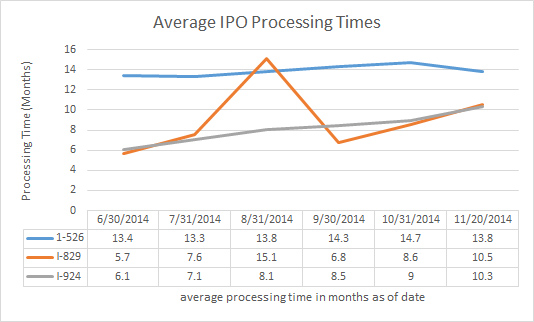
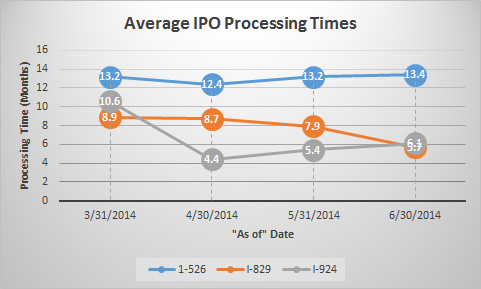
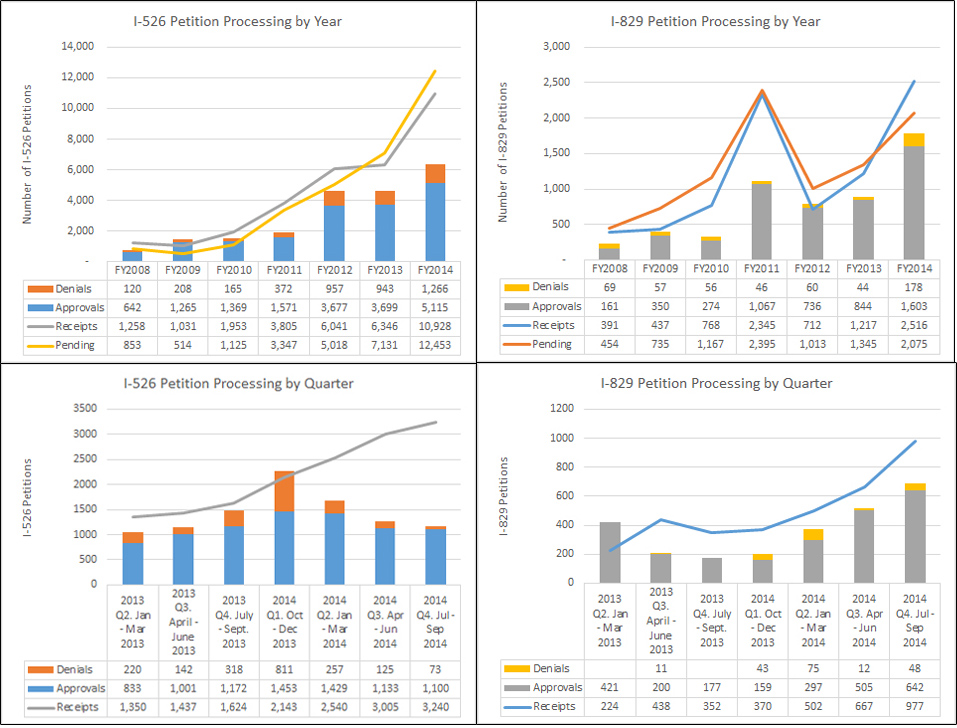
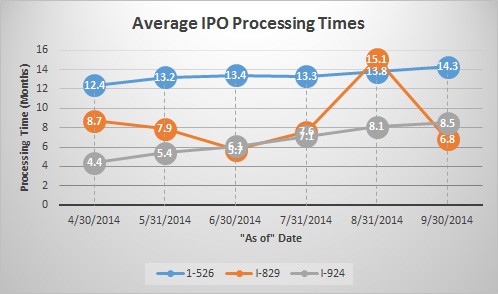
| (B) File I-526, receive priority date, and wait for USCIS to process I-526 petition | Can’t make material changes to the petition or depart materially from the business plan during this period | In 2015-2016, average processing time ranged 13-17 months (USCIS target is < 6 months) |
| (C) Receive I-526 approval, wait for visa interview or I-485 status adjustment (may include waiting for visa number) | Can’t make material changes to the petition or depart materially from the business plan during this period | From a few months to about 10 years from I-526 filing, if waiting for a visa number (variable depending on whether China-born, where in queue, and whether visa numbers or allocation change). This spreadsheet has the quantitative factors that I know of. |
| (D) Receive green card; begin two-year conditional permanent residence period | Investment must be sustained and at risk; job creation must occur; material change may be ok | 24 months exactly (file I-829 after Month 21) |
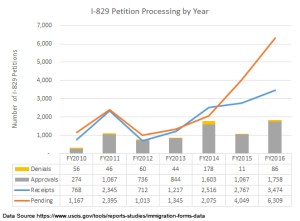
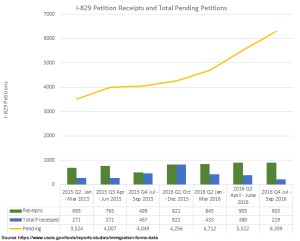
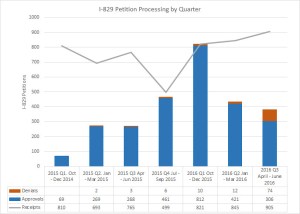
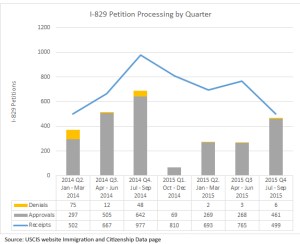
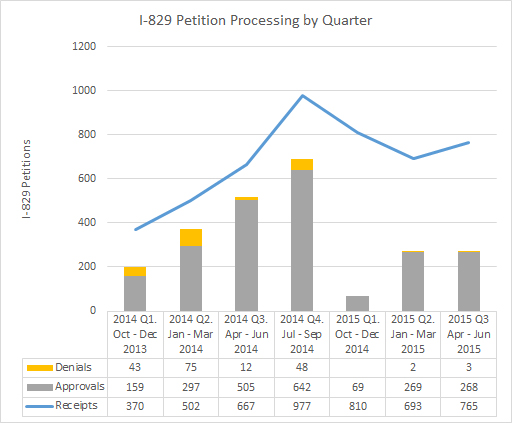
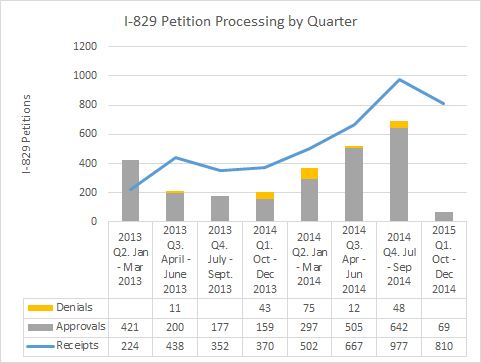
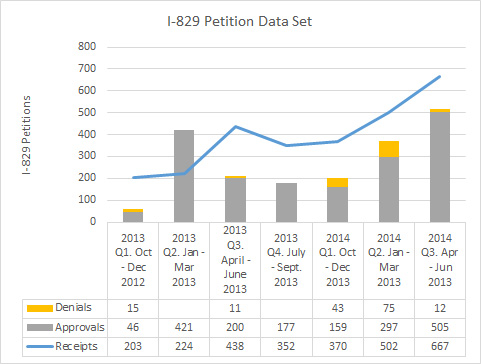
| (E) Wait for USCIS to process I-829 petition | For petitions processed in 2015-2016, average ranged 12-29 months | |
| (F) Receive I-829 approval and conditional permanent residence | No longer subject to EB-5 program requirements |
Notes on EB-5 Stages
- Investment and Escrow: During Stage (A), the EB-5 investor’s full investment must be committed to the enterprise (in the enterprise account, escrowed, or otherwise contractually committed). If escrow is used, investor funds must be released to the enterprise at latest before (D) begins.
- Sustaining Investment: The investment must be sustained from (B) through (D) and must be actively deployed in job-creating activities at least during (D). USCIS is drafting new policy to address how exactly funds need to be deployed during (D), but has not finalized it yet. (In the meantime, the industry has tried to figure out reasonable redeployment policies.) The EB-5 investor may not recoup or draw down his investment before (E) and may be wisest to wait until (F) to exit.
- Material Change: The deal needs to be planned and structured carefully during (A), as the petitioner will have limited opportunity to fix any deficiencies after filing I-526. The EB-5-funded enterprise must closely follow the I-526 business plan at least during (B) and (C), when material changes are not permissible. USCIS allows some flexibility to depart from the business plan during (D). (See also my post on what material change means.) Note that proposed regulations and proposed legislation both offer to relax the material change policy and protect priority dates in light of long waits.
- Job Creation: The investor can claim job creation that occurs from (B) to (D), and following his investment in (A). Under limited circumstances, he can also claim jobs created before the date of his investment or after the date that he filed I-829. In principle, he should be able to claim jobs that no longer exist when he files I-829 provided that the jobs were created and sustained for more than two years.
- Planning Horizon: USCIS policy requires the I-526 business plan to show that jobs can be created within 2.5 years of I-526 approval. However, businesses and investors should keep in mind that investors might not actually be verifying job creation until a decade after I-526 approval, considering the visa backlog and retrogression effect for EB-5 investors, not to mention processing times. EB-5 investment must be sustained throughout the conditional residence period (D), so premature exits must be avoided and exit strategies should consider realistic timing. Five years used to be a standard target for investor exit, but can be dangerously early for the average investor today.
Potential changes that would affect the EB-5 process and wait times
- Increase the EB-5 visa quota: I list this because it’s the most obvious/simplest solution for the current dire picture, but I’m told that it is a political impossibility. Increasing the EB-5 visa quota would require increasing the total US visas and/or reorganizing how the total visa pie gets divided among different types. That would require comprehensive immigration reform — something that’s not on the table at all now and not expected any time soon.
- Increase EB-5 visa availability by counting investors only toward the EB-5 quota, not spouses and children. This is a live possibility, included in several versions of EB-5 reform legislation and suggested to DHS for revised regulation (see p. 22-29 of the EB5-IC comment). And indeed, there’s a good argument for this being the original intent of Congressional representatives who designed the EB-5 program. If about 10,000 investors can get visas per year, then about 30,000 people can get cleared from the backlog per year (average 3 visas per investor), and wait times would shorten dramatically. Currently, just over 3,000 investors get visas per year, with family members taking the remainder of EB-5 visas.
- Increase EB-5 visa availability by allowing EB-5 to recapture unused visas (see p. 22-29 of the EB5-IC comment)
- Lighten the burden on China-born EB-5 investors by removing the per-country cap for visas. This has been suggested by a couple recent bills. It wouldn’t speed up the visa queue overall, but would mean that China-born investors don’t get held back by retrogression, and other investors don’t get to jump ahead i.e. would share/mitigate the long wait.
- Use visa set-asides to incentivize Targeted Employment Area investment. This has been proposed in several EB-5 reform bills, and would shorten the visa wait time for new TEA investors while pushing other investors even further back in line. However, it’s likely that most set-aside visas would shortly return to the general pool (since the reform bills make TEA status difficult to achieve and the set-asides temporary) and thus the impact could be limited.
- Change the filing stages: Several legislative proposals suggest allowing investors to file I-829 after having sustained investment and job creation for at least 24 months, even if they are still waiting for a visa number. In this way, when they finally receive the green card, it can be permanent rather than conditional permanent residence (skipping Step D in the table above). Several EB-5 bills have also proposed to allow concurrent filing of I-526 and I-485.
- Mitigate the negative impact of long waits by adding more flexibility to the material change policy: Several legislative proposals and revised regulations provide more options and recourse for investors in case of material change, recognizing that such changes are inevitable over the course of years.
- Mitigate the negative impact of long waits by adding protection for children who would otherwise age out: Several legislative proposals offer to do this.
- Improve petition processing times: IPO continues to reaffirm its commitment to bring down processing times through staffing and efficiencies. I-829 petition times in particular should see improvement soon, as IPO has launched a new team devoted to I-829 adjudication.