FY17 per-country I-526 data, SEC action (registration)
October 9, 2018 37 Comments
Per-Country I-526 Data
IIUSA has received another year of per-country data for I-526 filings through the Freedom of Information Act process, and prepared a report for IIUSA members. Being ambivalent about freedom of information, IIUSA has decided to share this much with the public.
 The full FOIA data set for I-526 filings, approvals, and denials FY2016-FY2017 is being sold for $1,500 (discounted to $300 for IIUSA members).
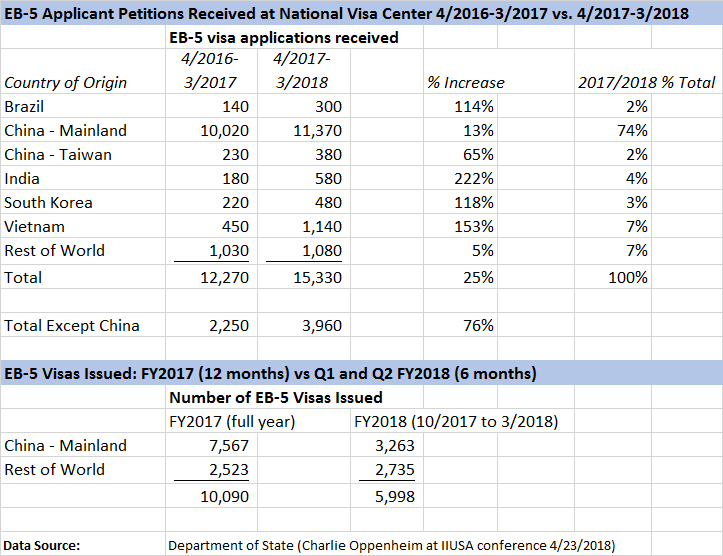
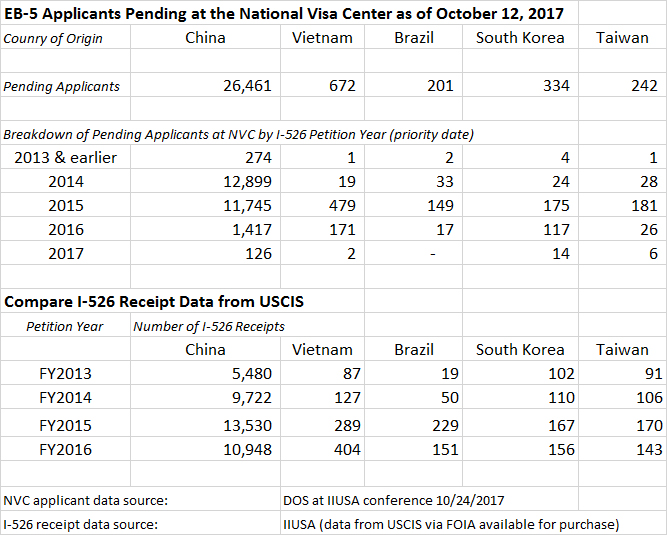
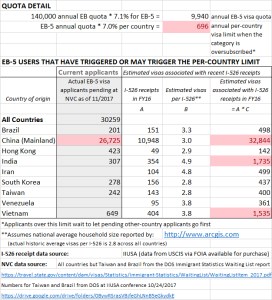
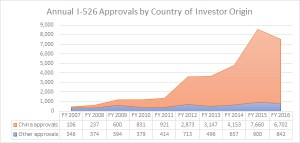
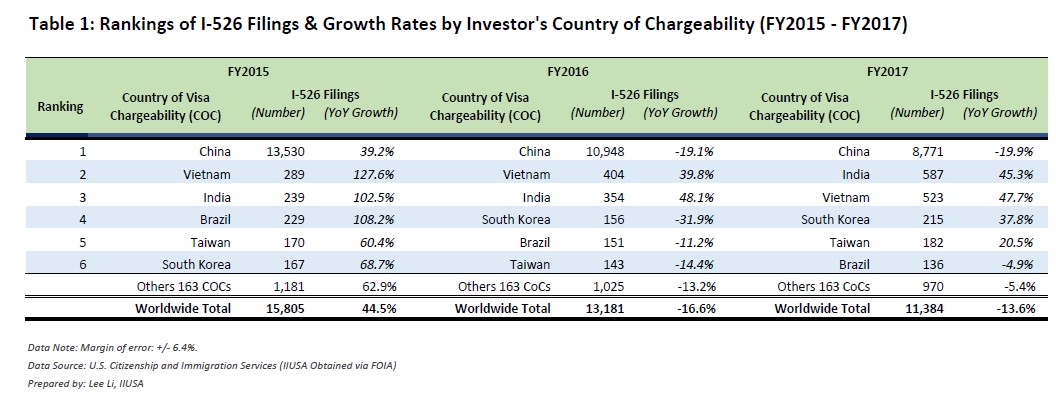
People who seek EB-5 investors will be interested to note shifts in the top six countries for EB-5 demand. Data on I-526 filings gives a better demand indicator than visas issued, since visas are usually issued 2+ years after the investment.
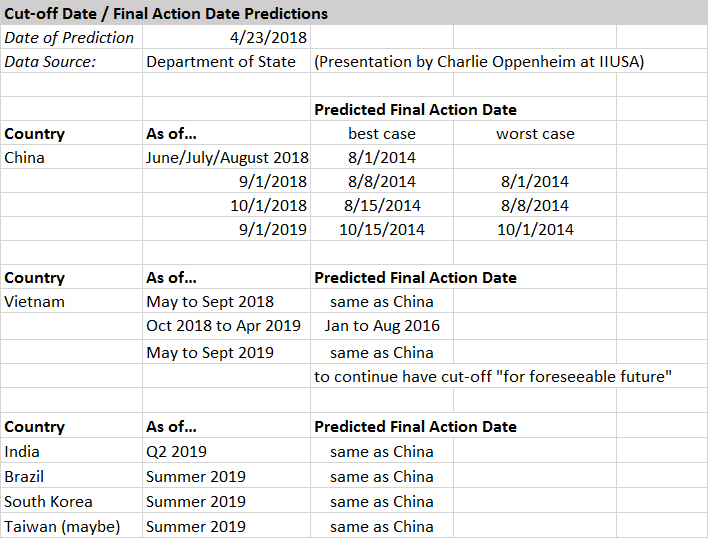
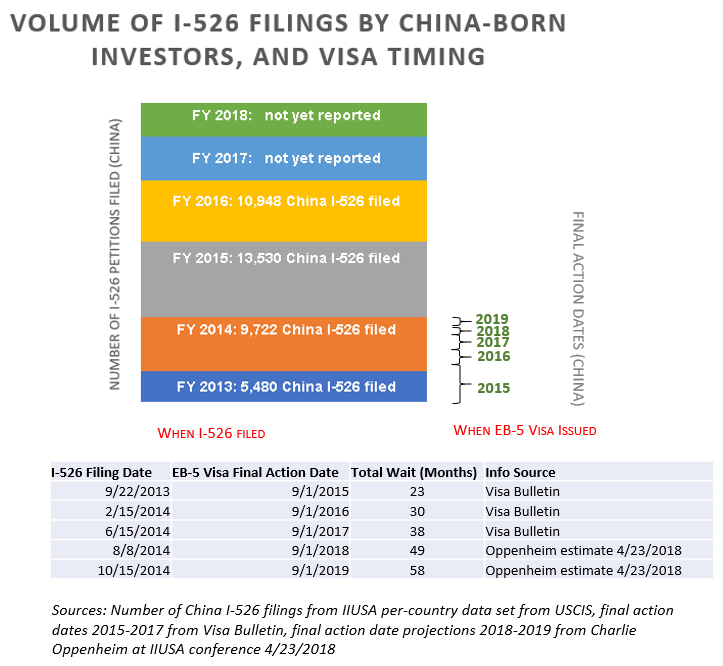
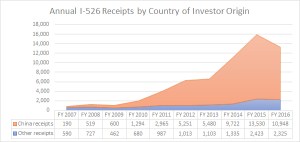
Past Chinese investors will note with concern the rising number of I-526 filings from other countries that aren’t oversubscribed. But Chinese can also take heart that increased demand in FY16/17 was concentrated in two countries that have (Vietnam) or will (India) exceed their cap and receive a demand-dampening cut-off date since FY2017. Only applicants from undersubscribed countries with no cut-off date can advance ahead of Chinese in the visa waiting line.
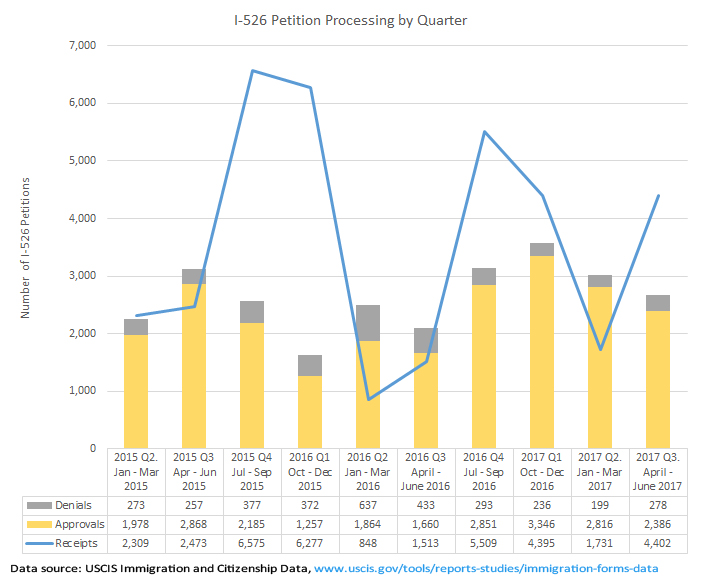
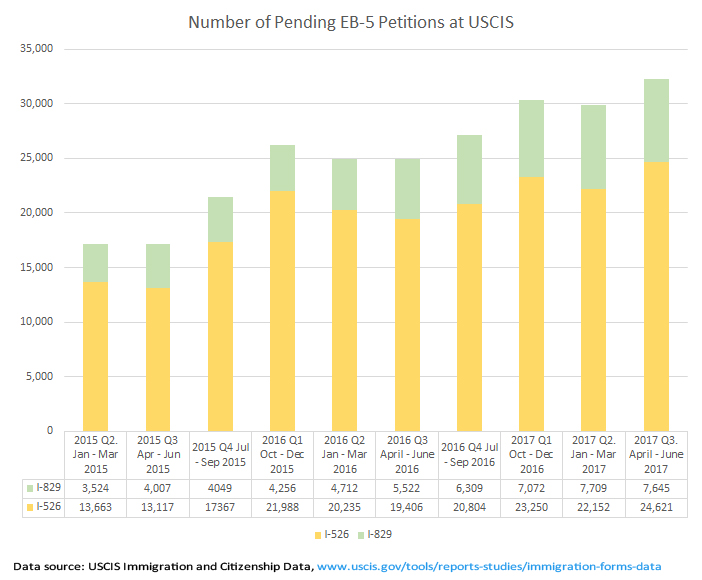
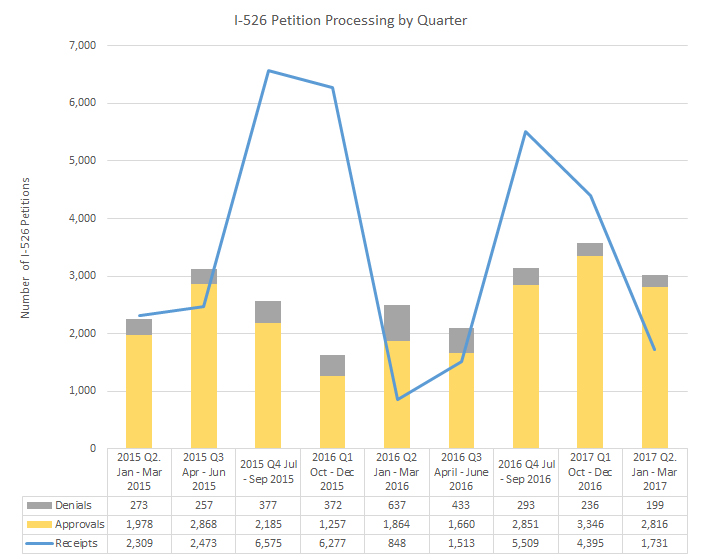
Indians will appreciate the clue to future EB-5 visa demand and wait time. Table 1 shows that Indians filed 354+587=941 I-526 from FY16 to FY17. Let’s say 941 I-526 filed * 85% I-526 approval rate * 2.9 visas per I-526 approval = 2,320 visas demanded. (I’m using historical worldwide averages as variables for this estimate, though I guess Indian approval rates may be lower and family size higher than the China-dominated average.**) About 2,320 EB-5 visas demanded by Indians * 1 year/696 EB-5 visas available to India = about 3.3 years to issue the EB-5 visas demanded by India in FY16 and FY17. 3.3 years/2 years = 1.6 more demand than supply = backlog coming. Processing time information indicates that USCIS is only just now approving I-526 from 2016, so many of those I-526 filers haven’t reached the visas application stage yet. When they do, they’ll exceed the per-country cap and lead to a visa bulletin cut-off date for India. When that will happen depends on USCIS’s speed in adjudicating I-526. The length of the visa wait time will vary for people with different priority dates. If only we had FY2018 data as well! Charlie Oppenheim at Department of State probably has these numbers, and I look forward to hearing what he has to say at the AILA/IIUSA EB-5 Industry Forum in a few weeks. I also look forward to USCIS finally publishing FY2018 Q3 data for worldwide EB-5 petitions filings (which they’re very late in doing). Because good business decisions depend on information, I continue to update and share my spreadsheet of available data related to EB-5 visa availability.
**UPDATE: I’ve since realized that DOS publishes a report of Monthly Immigrant Visa Issuances that contradicts my assumption about family size. I logged the monthly reports of EB-5 visas issued to Indians and Vietnamese so far in FY2018 (See Tab 2 Column AS of my backlog spreadsheet), with this result:
- India: 347 EB-5 visas issued Oct 2017-August 2018, of which 130 were to principal applicants (average 2.67 visas per principal)
- Vietnam: 658 EB-5 visas issued Oct 2017-August 2018, of which 171 were to principal applicants (average 3.85 visas per principal)
SEC Action on Unregistered Sales of Securities
The SEC has set a gentle example to the EB-5 community in a recent enforcement action. The SEC targeted EB-5 giant CMB Export for violations of registration requirements and improper transaction-based compensation until 2015, and settled for $11.6 million in penalties (not much, considering the amount of investor funds involved) and compliments to CMB’s compliance efforts since 2015. In its press release, the SEC emphasizes the intended moral of the story: “All securities, including EB-5 securities, must comply with registration provisions, which are essential to protecting investors. In the EB-5 industry, strong compliance policies can help ensure that companies meet their registration obligations under the federal securities laws.” Other regional centers will be interested to read the SEC Order and consider their own past and future policies. Note that previous actions have made an issue of transaction-based compensation to unregistered broker-dealers, but this is the first SEC action to target offering partnership interests without first registering the offering, or having a valid exemption from registration.