New I-485 data and the Sept 2026 demand surge
October 27, 2026 Leave a comment
USCIS has updated the Immigration and Citizenship Data page with a couple new reports showing the pending I-485 inventory as of the beginning of September and October 2026. I copied the EB-5 I-485 data into my log of monthly reports, and analyzed trends. The numbers reflect — as expected — a surge in EB-5 demand ahead of the September 30, 2026 regional center grandfathering deadline. India Rural lead the I-485 filing surge. The data reports also reflect modest year-end processing efforts for EB-5 adjustments.
Pre-Grandfathering Demand Surge
So far USCIS has published monthly I-526/I-526E receipt data only through June 2026, and we have had to guess about EB-5 demand since then. How big was the surge of investors trying to get petitions and applications filed before grandfathering? Now the I-485 inventory report as of October 5, 2026 gives a clue, showing a surge in concurrent filings from U.S.-based applicants. India Rural is particularly dramatic, with nearly a thousand I-485 applicatinos in one month. Once I-526/I-526E data is published, we’ll get a bigger picture that also represents demand from investor families abroad who do not file I-485 concurrently.
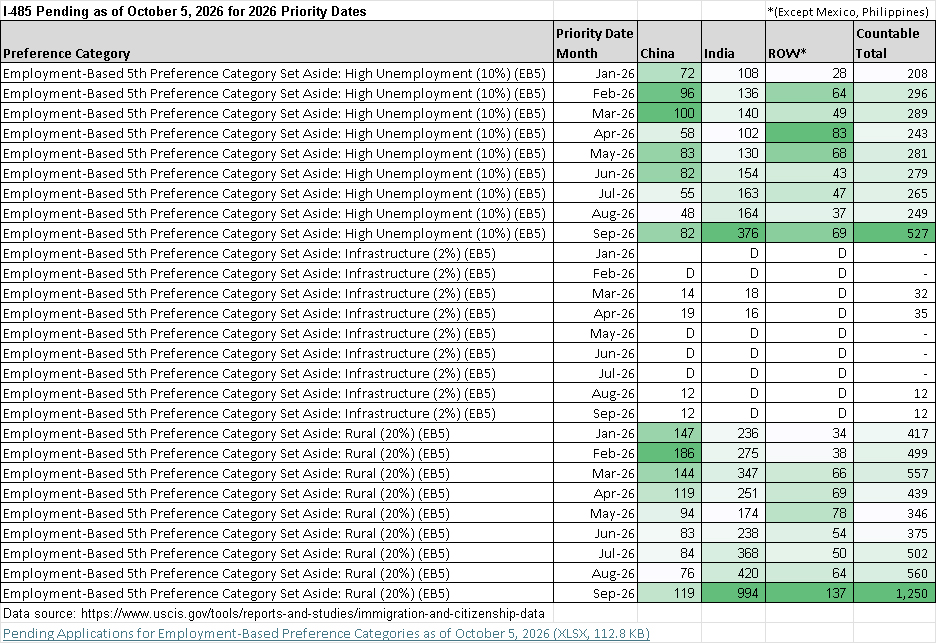
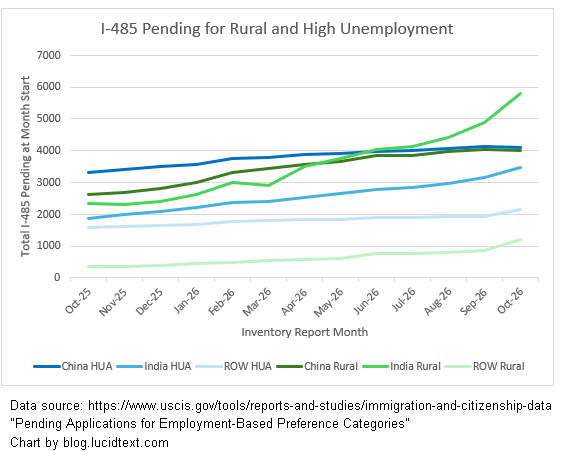
The table above highlights only I-485 pending for applicants with 2026 priority dates as of October 2026. The following chart plots total I-485 pending as of the start of each month in FY2026. Again, India Rural showed the strongest growth among U.S.-based applicants over the course of the year.
Here’s how the total pending I-485 inventory for EB-5 set-aside categories looked as of October 5, 2026. (The I-485 report does not distinguish which pending I-485 belong to applicants who currently qualify for visas, and which to people who can’t compete for visas yet because their underlying I-526 or I-526E is still pending.)
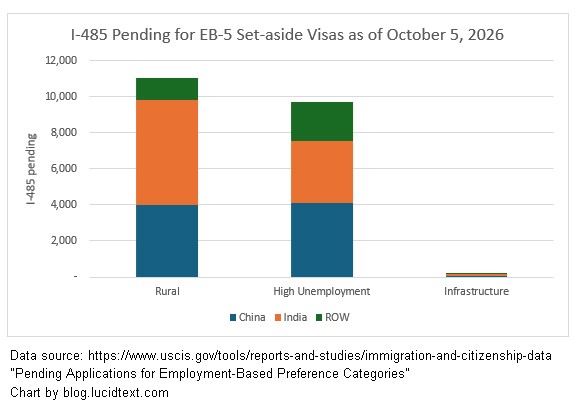
Over 21,000 set-aside visa applicants had I-485 pending as of early October. (That’s not counting all the set-aside applicants represented by “D” values in the report, which may add a couple thousand more, and not counting I-485 pending for unreserved visas.). 21,000+ is a lot of current/future adjustment applicants for categories that have only 32% of annual EB-5 visas set aside.
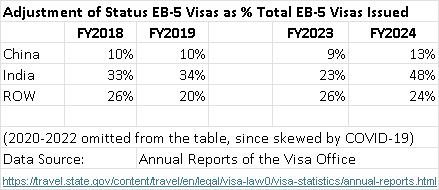
What portion of the total EB-5 backlog do I-485 applicants represent? We do not know exactly, since Department of State does not publish a parallel report of current/future applicants awaiting consular processing. But certainly, the pending I-485 report does not capture all or even most of the EB-5 backlog. Historically, status adjustment represents a minority of EB-5 visas issued — though the proportion has varied by country and over time. (The following table goes only through FY2024, because that’s when the visa office stopped publishing annual reports, and omits the pandemic-skewed visa years of 2020-2022.)
I-485 Year-End Processing Trend
We always hope that the government will complete the fiscal year with a surge of effort to issue that year’s visa numbers.Examining differences between the monthly I-485 inventory reports, I gather that this did — belatedly — happen to some extent for status adjustment for EB-5 set-aside visas.
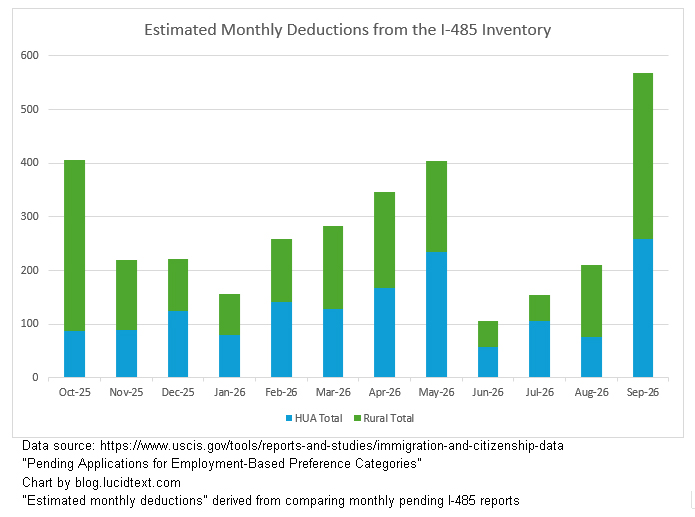
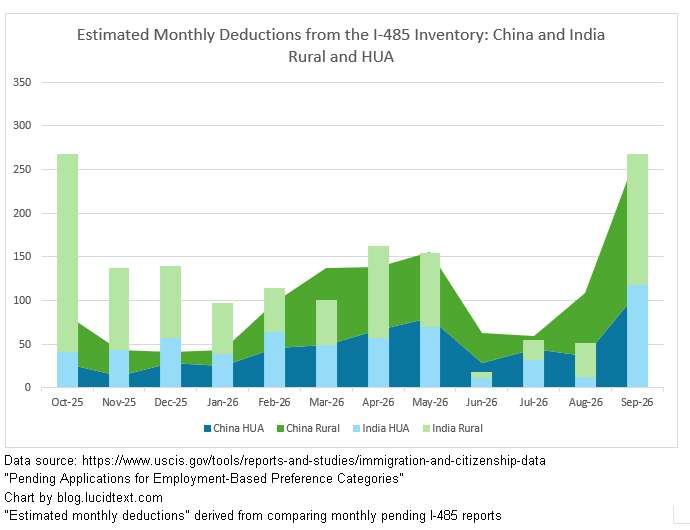
I also visualize data by country, having noted that India got such an outsize share of AOS processing activity in 2025. In recent months, however, Chinese I-485 appear to have received increased attention.
The USCIS I-485 reports also include interesting data for pre-RIA/Unreserved applicants that I did not have time to cover here.
If you benefit from analysis like this, which is really a lot of work to compile and present, please consider making a contribution to the blog. I have Stripe and Paypal links available. Your support can help make the effort worthwhile and sustainable.
Discover more from EB-5 Updates
Subscribe to get the latest posts sent to your email.

