FY2026 Q1 EB-5 Consular Processing and AOS Update
August 18, 2026 Leave a comment
Almost a year late (and after I made another plea through my nicer Senator’s office), Department of State finally started publishing monthly visa issuance data for FY2026. Still only three months of data, and half the links are broken, but it’s something. This is our first window into consular processing activity for EB-5 this fiscal year. (8/20 UPDATE: now it’s five months of data.)
I anxiously monitor visa issuance activity, because it determines Visa Bulletin movement. When Department of State gets close to issuing all the Rural or High Unemployment visas available for the period, that’s when the Visa Bulletin gates can come down with final action dates to control demand, starting with China and India.
In FY2025, DOS (apparently) ended up issuing barely half of the set-aside visas available. No wonder the FY2025 Visa Bulletins stayed “current” for Rural and High Unemployment. No wonder backlogs grew. The new data shows some increased activity for the first quarter of FY2026, with visa issuance volumes getting closer to catching up with availability — at least for Rural.
The following table combines the consular processing data published so far (through December 2025 February 2026) with adjustment of status estimates that I derived from comparing monthly I-485 inventory reports published by USCIS (now available to May 6, 2026).
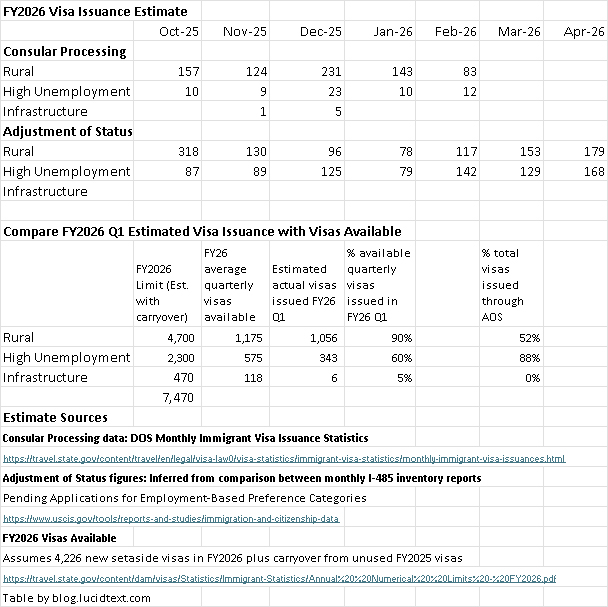
The Rural movement is good news for the backlog — the line is advancing and people are getting visas — and a retrogression warning signal. Department of State could be close to issuing all this year’s supply of Rural visas, if it kept issuing visas at the Q1 rate or better. I look forward to seeing what the September 2026 Visa Bulletin will say about year-end visa availability. Meanwhile High Unemployment visa issuance numbers were very low in Q1, not close to using available supply (but might have picked up since then, judging by estimated AOS numbers for later months). Department of State reports issuing a few Infrastructure visas in Q1 — nowhere near the limit, but a nice proof-of-life considering that USCIS continues to omit Infrastructure from its I-526E reports. Overall, it appears that Adjustment of Status enjoyed better movement than consular processing in Q1.
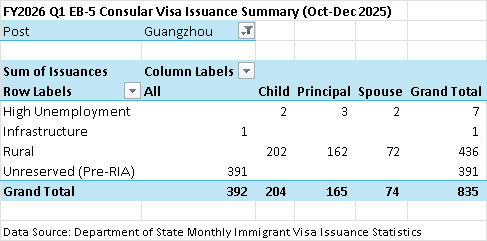
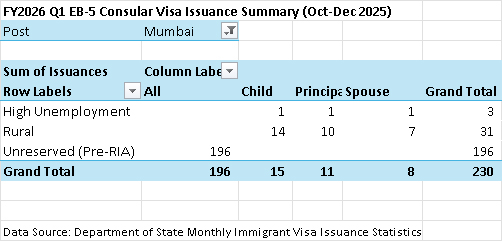
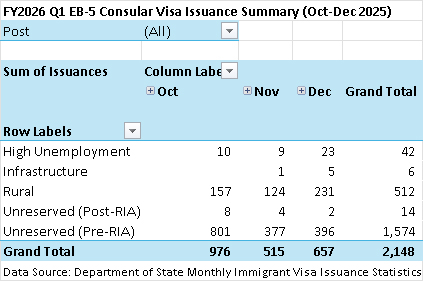
I’m mainly interested in consular processing as a piece of the total EB-5 visa issuance picture, but it’s also interesting to look at detail in the consular reports. For example, the consular reports include set-aside visa codes that distinguish principals from spouses and children. I note that the actual visas-per-investor ratio on the consular side is closer to 3-to-1 than the 2-to-1 ratio that I use as a baseline guess for total EB-5 backlog estimates. I’m copying below a few tables that I made when interpreting the DOS reports.
And finally… I decline to report the announcement because the propaganda-speak rhetoric coming out of USCIS makes me ill, but people should note the August 8, 2026 policy manual changes related to denial process. The nub is in this quote: “If all required initial evidence is not submitted with the benefit request, or the evidence submitted is insufficient to demonstrate eligibility, USCIS may deny the benefit request without issuing an RFE or NOID.” Immigrant now know what they knew already: that they are in a hostile environment where the government seeks to deny benefits. The moral: even more than before, avoid grey areas, partial filings, needing to supplement the record after filing, disorganized paperwork, or generally any situation that depends on an adjudicator going out of the way to be careful, flexible, or charitable with review. Even more than before, strive to help clients find a straight and narrow path and to assemble documents that are complete and correct the first time, and hard for the reviewer to misinterpret. The previous policy helped to avoid frivolous denials by affording the petitioner a chance to respond to questions before misinterpretation became denial. How many RFEs have we answered by gently pointing out: “the evidence that you say is missing is right there in Exhibit 2.” Now USCIS is giving itself another policy cover to get away with errors and omissions in review, while saying that it’s just virtuously cracking down on errors and omissions in filings. Sigh.
Discover more from EB-5 Updates
Subscribe to get the latest posts sent to your email.

