This post applies data that’s recently become available to practical questions that EB-5 issuers and past/potential investors keep asking. [FYI: many edits made since first posting.]
Question 1: How long does I-526 take?
This question has a nice answer for new petitioners: much less time than before.

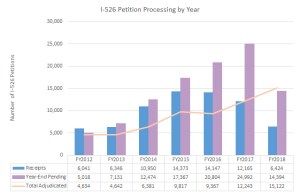
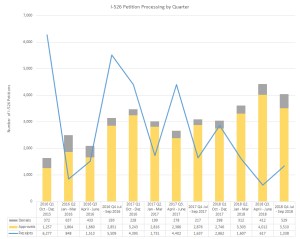
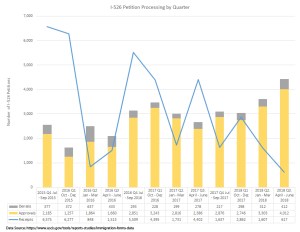
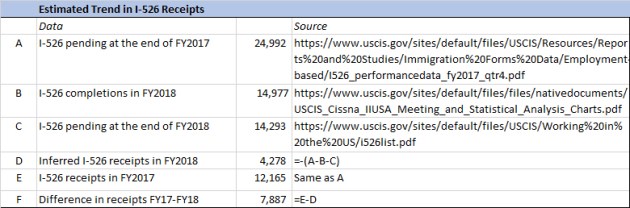
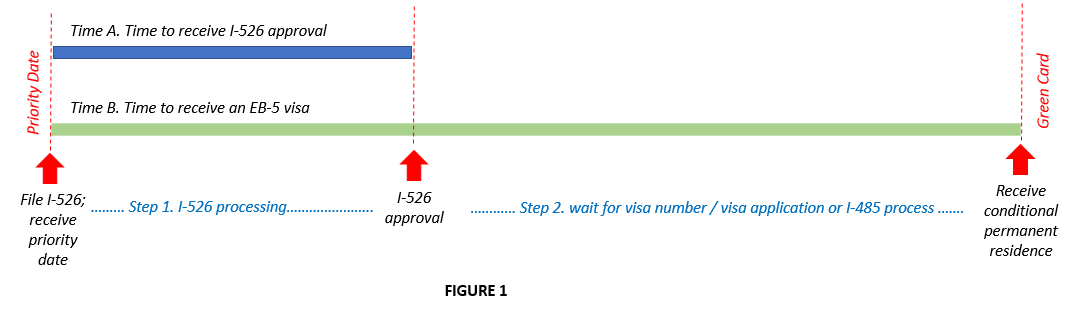
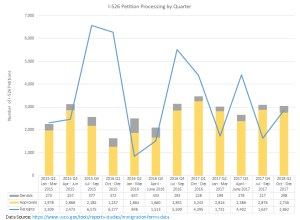
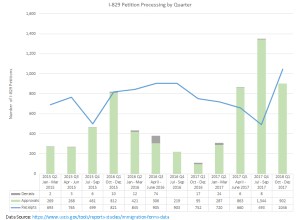
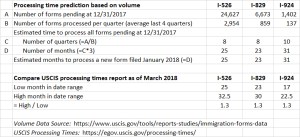
As inventory falls and flow rate increases, processing times fall. People who filed I-526 in 2016/2017 entered at the top of a mountain of pending petitions (as illustrated in Figure 1), and have suffered long processing times as a result. But people who file I-526 now in November 2018 are just standing on a molehill by comparison, plus benefiting from improved completion rates. They can expect their petitions to be processed in less than a year, I estimate. (I estimate processing times based on USCIS data for pending and processed petitions. See my I-526 time spreadsheet.)
As I-526 times improve, the many countries in the world with no visa wait (all but China, Vietnam, and (soon) India) will be able to enjoy EB-5 as a fast track once again. And project companies, investors, and program integrity all benefit from prompt attention by USCIS to investor petitions.
Question 2: If I’m a Vietnam-born person with pending I-526 or pending visa application, how long can I expect to wait for EB-5 visa availability?
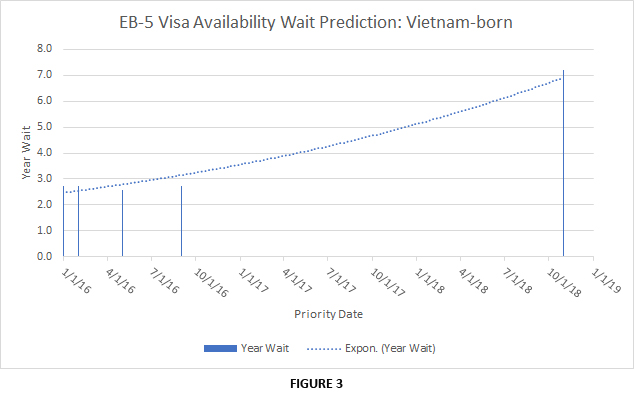
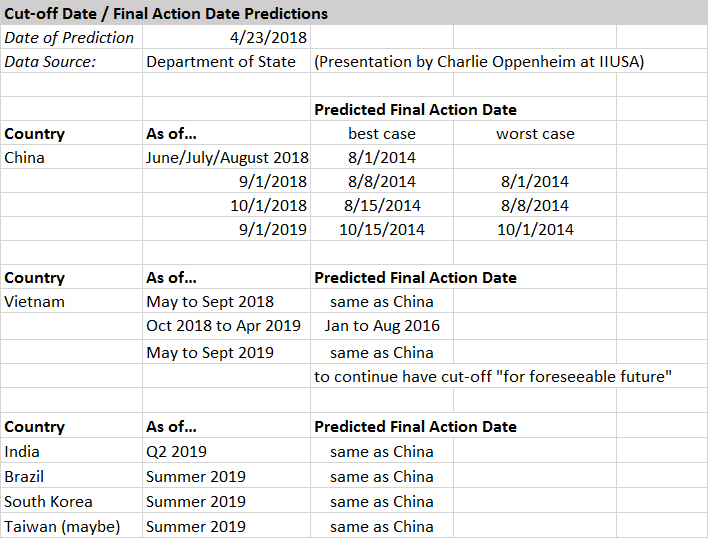
This question has a better answer than many people fear. Last month when Charles Oppenheim of Department of State predicted a 7.2-year wait for Vietnam-born, he was giving a prediction for one point: people filing I-526 on October 30, 2018. If that point-in-time prediction is correct, then the wait time will be less than that for everyone who filed I-526 before October 30, 2018. The blue columns in Figure 3 mark the data points we have: actual wait times for past applicants (calculated by subtracting Final Action Date from Visa Bulletin Date in past Visa Bulletins), and Oppenheim’s future predictions. Fit a trend line through those points, and you can estimate wait times for other priority dates, between the past actual and future predictions. (The trend won’t turn out neatly linear in real life, but I think this is good for a rough estimate. If you want a better trend line, you can factor in quarterly fluctuations in I-526 filing and approvals, and guidelines for allocating visas by quarter. Or you could push for legislative/administrative fixes that would change the picture entirely.) These charts and source data are in the “Vietnam Calc” tab of my Backlog calculation spreadsheet.

[NOTE: When I first put up this post, I included a Figure 2 for China with linear trend through past visa bulletin waits for 2014 priority dates up through Oppenheim’s 14-year prediction for Chinese filing in October 2018. But the more I thought about it, the more I disliked the China chart — because that 14-year estimate for 10/2018 is questionable, and because complicating factors will likely make the China trend look more like the craggy mountain in Figure 1 than a slope. So I edited out Figure 2.]
Question 3: If I’m an India-born person with pending I-526 or pending visa application, can I expect to get a visa number in FY2019, before visas for India get used up for the year (i.e. before Department of State sets a Final Action Date for India)?
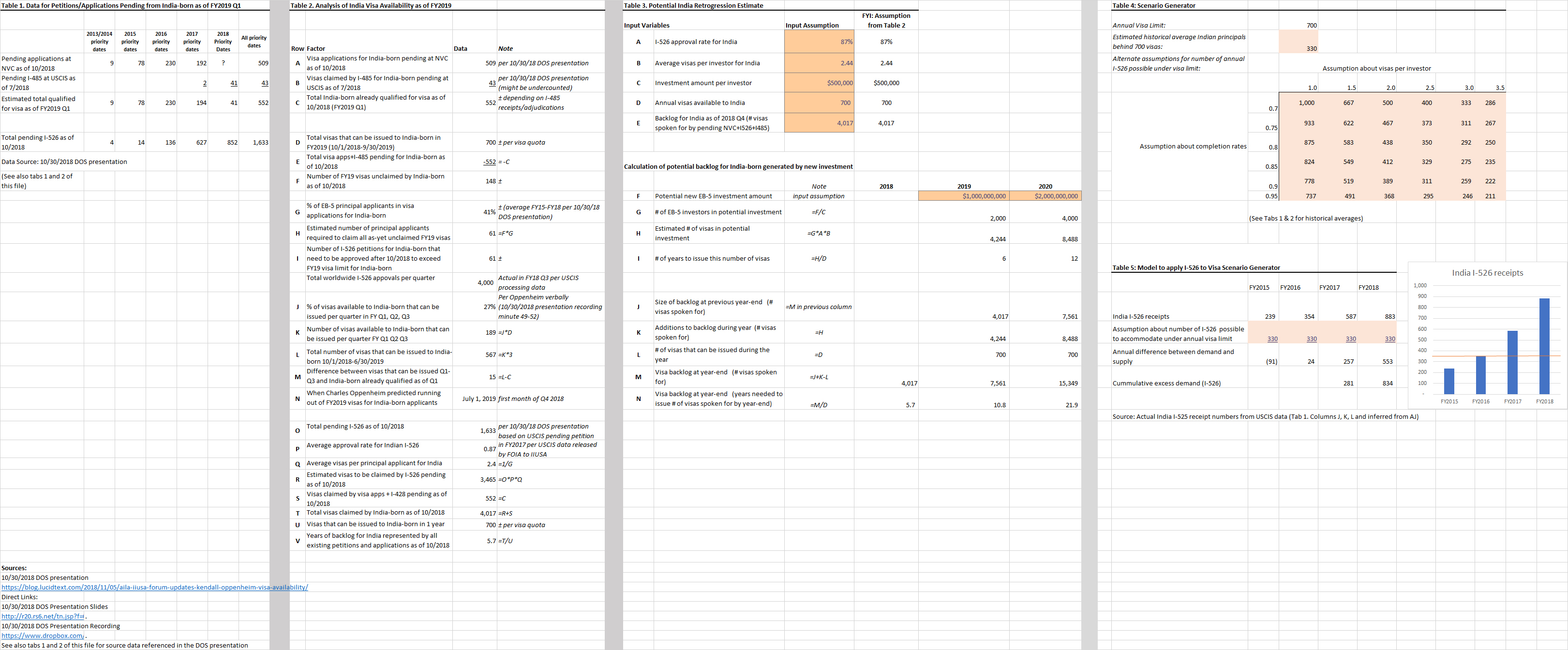
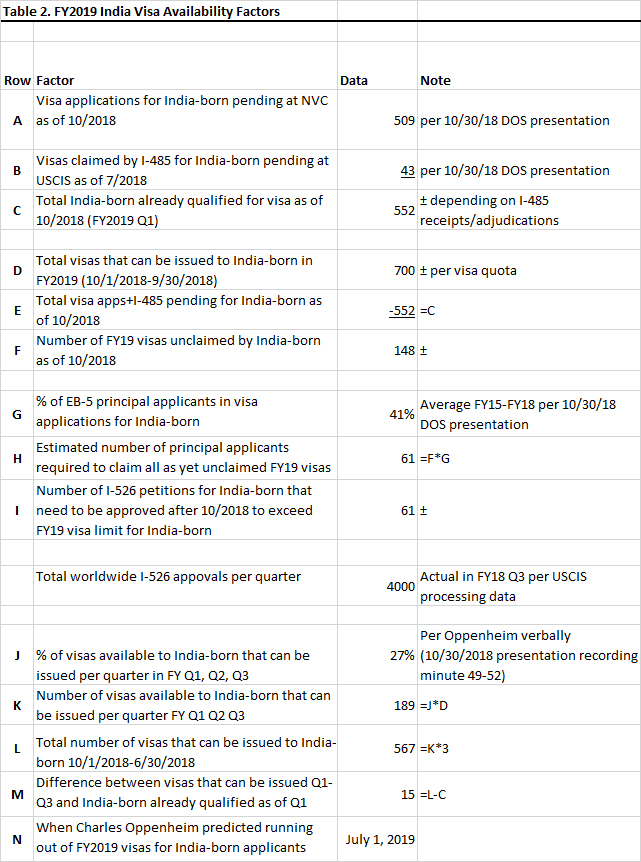
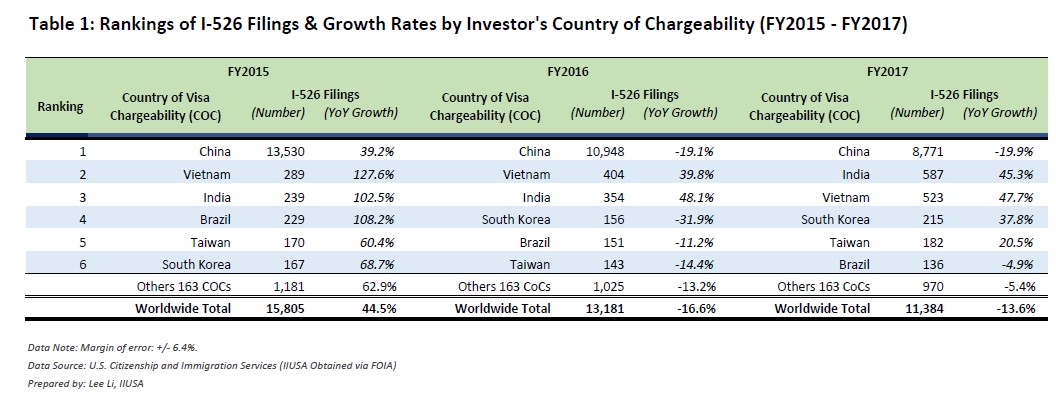
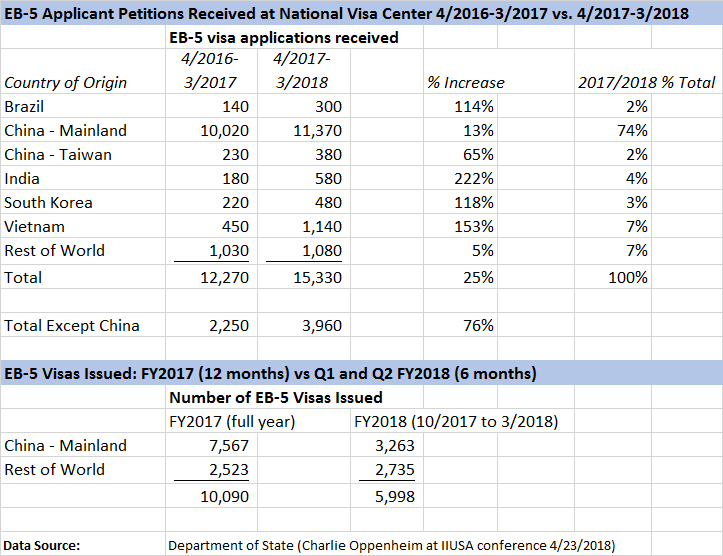
This question is tough, because the answer depends on predicting which petitions get adjudicated in the next few months, and how many. Table 1 and Table 2 below highlight the data points (from among those provided in the 10/30/2018 presentation by Charles Oppenheim) that I consider particularly relevant to the question. (These tables are also in the “India Calc” tab of my Backlog calculation spreadsheet.)
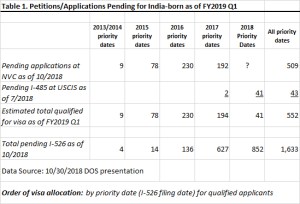

The worst case scenario is that in the next couple quarters, USCIS approves a lot of the I-526 pending for India-born people who filed I-526 in 2013-2017. If that happens (and the newly-approved petitioners quickly become documentarily qualified for a visa), the result could be that no one born in India who filed I-526 more recently will get a visa number in FY2019, no matter how quickly their I-526 was/will be processed or when they filed I-485 or the visa application. This risk exists because visa numbers get issued to qualified applicants in order by priority date, not based on when they filed their visa applications. The risk is accentuated by the fact that Charles Oppenheim at DOS is required by statute to dole out available visas gradually over the course of the fiscal year (no more than about 27% each quarter in the first three quarters), not all at once to as many people as qualify for them. That delay gives time for the pool of documentarily qualified applicants to grow, as USCIS approves more petitions.
The best case scenario is that in the next couple quarters, the pool of India-born people qualified for a visa doesn’t grow much, and additions to the pool mainly consist of people who filed I-526 recently. In that case, everyone already qualified for a visa as of Q1 FY2019 (500+ people) could actually get a visa in FY2019. Plus a few more people (about 60 investors with their families) who will get I-526 approval and become documentarily qualified in FY2019 may also get allocated visas before the approx 700 visas available for FY2019 run out. The best case scenario is possible because expedited projects have been popular with Indians, USCIS can be slow to process older I-526 (and has a lot of older petitions in the backlog from countries besides India), and the process between I-526 approval and becoming documentarily qualified can also be very slow.
The facts in Table 1 and Table 2 suggest to me that an India-born person filing I-526 today is unlikely to get a visa number in FY2019, regardless of how quickly they can get I-526 approval and qualified for a visa. There are just so many older petitions and applications already in the system. I don’t have my life savings and family on the line, however. If you do have a major life decision depending on EB-5 timing, you should spend more time with the reports and spreadsheets to make your own estimate between the best and worst case possibilities. And talk with the immigration lawyer about limitations and benefits of being at various points in the process (I-526 pending, I-526 approved but not yet documentarily qualified, I-485 pending, documentarily qualified at NVC…) at the time when DOS publishes a Final Action Date for India.
For anyone who doesn’t manage to get a visa number in FY2019, don’t be too discouraged. India will have a trend line, like Vietnam as discussed above. You don’t automatically wait 5.7 years for a visa by virtue of having been born in India. Your wait time will depend on your priority date, with dates before October 2018 promising shorter wait time.
My post EB-5 Visa Waiting Line and Visa Allocation explains in more detail how visa allocation works. FYI, the Telegram group https://t.me/EB5VisaGroup notified me that they assembled their own India prediction spreadsheet. I’m not posting it here because I don’t know how to explain all their calculations and sources, but you can reach out to the group to request their additional analysis.
To the extent that my analysis and reporting benefits your decision-making, please consider my PayPal contribution option (corrected link). My spreadsheets and posts take a lot of time and thought that can only be rewarded if others share their benefit. I hope the work helps my clients who need information, and an industry that needs transparency, but it’s a sacrifice for me personally as a service provider dependent on new EB-5 business.



















 EB-5 Updates