EB-5 Set-Aside Visa Retrogression in 2025?
December 10, 2024 2 Comments
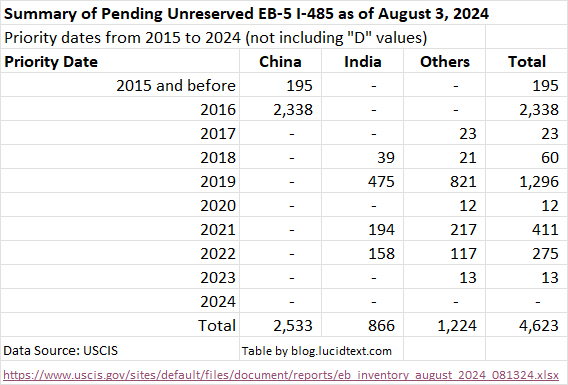
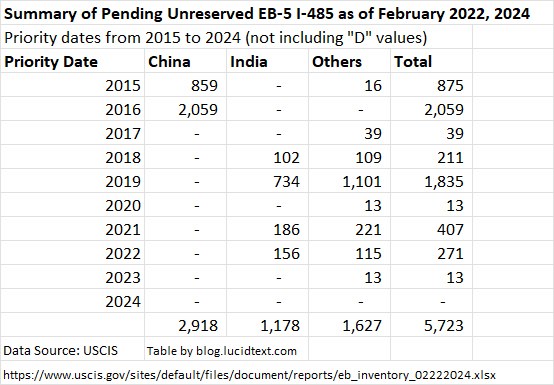
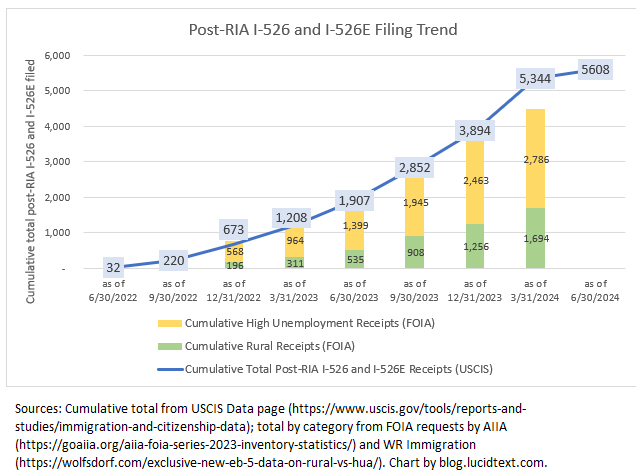
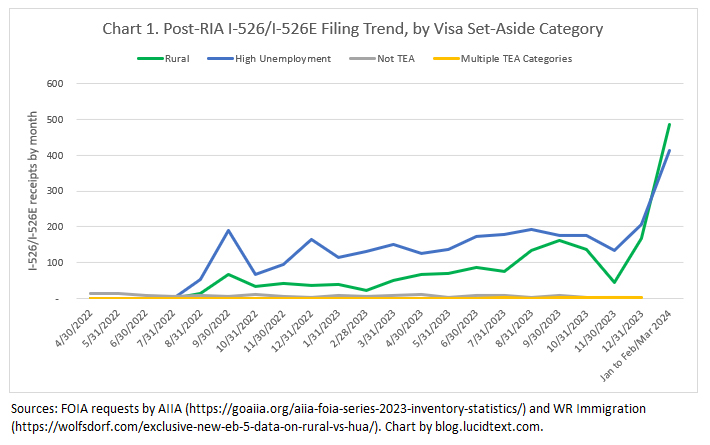
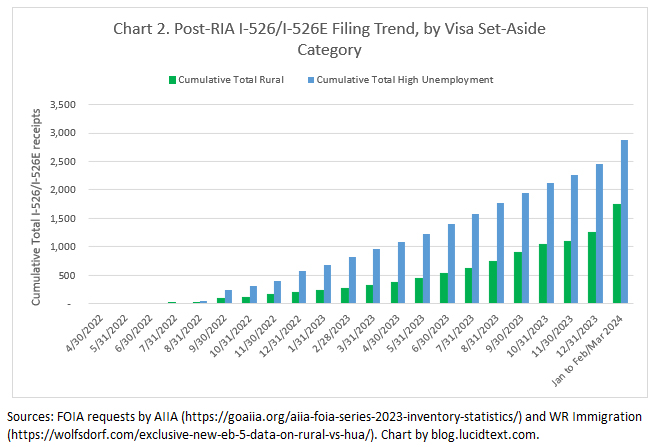
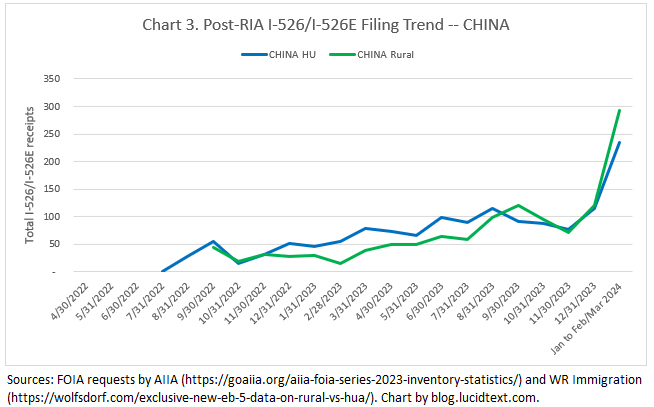
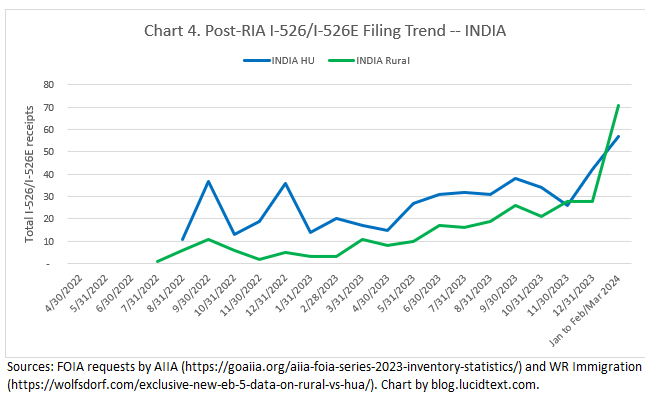
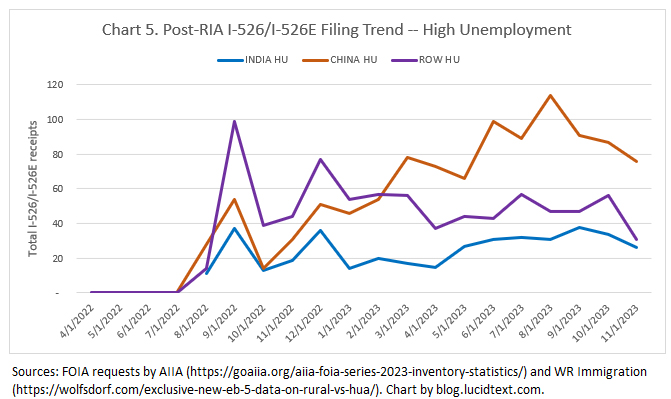
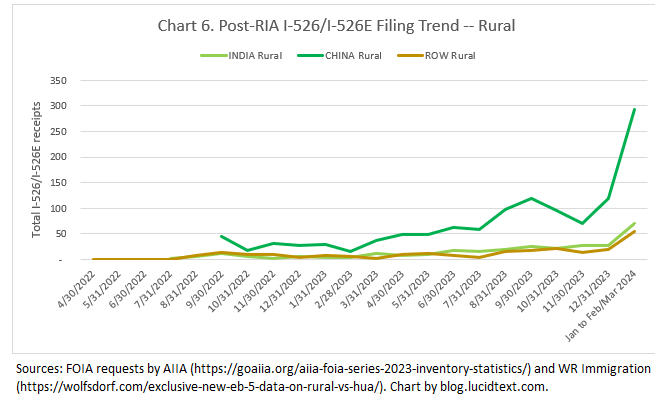
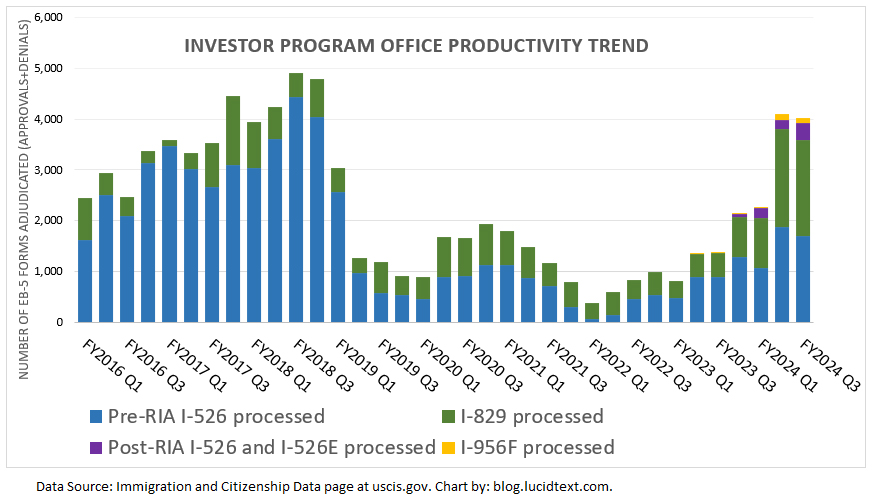
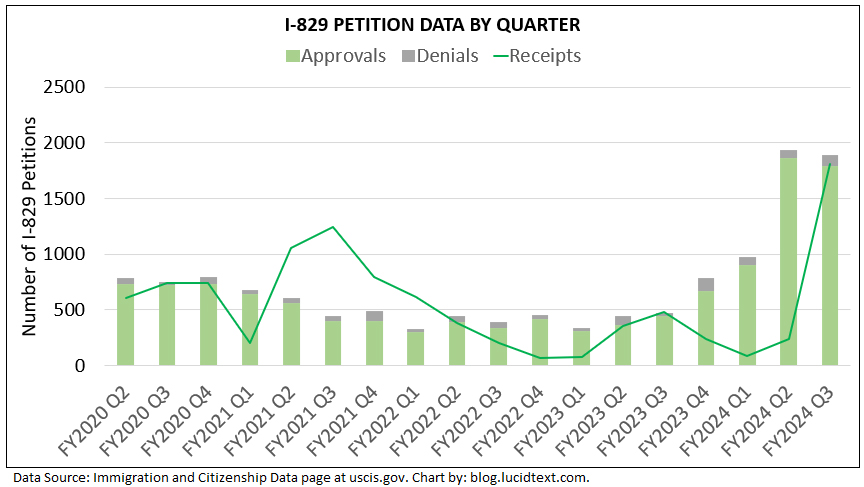
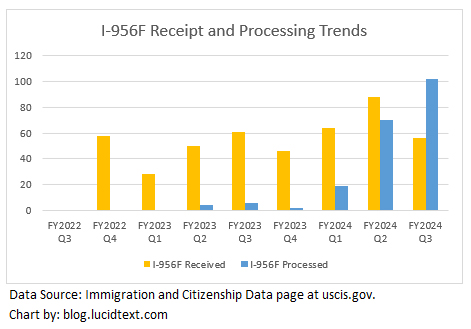
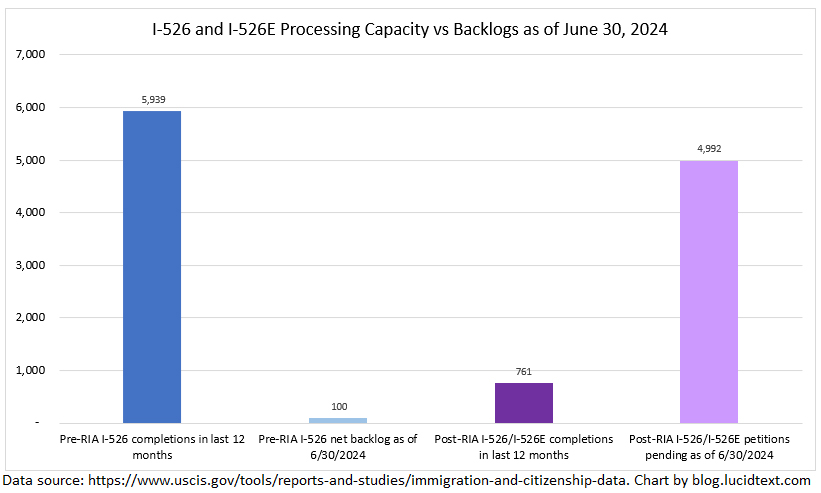
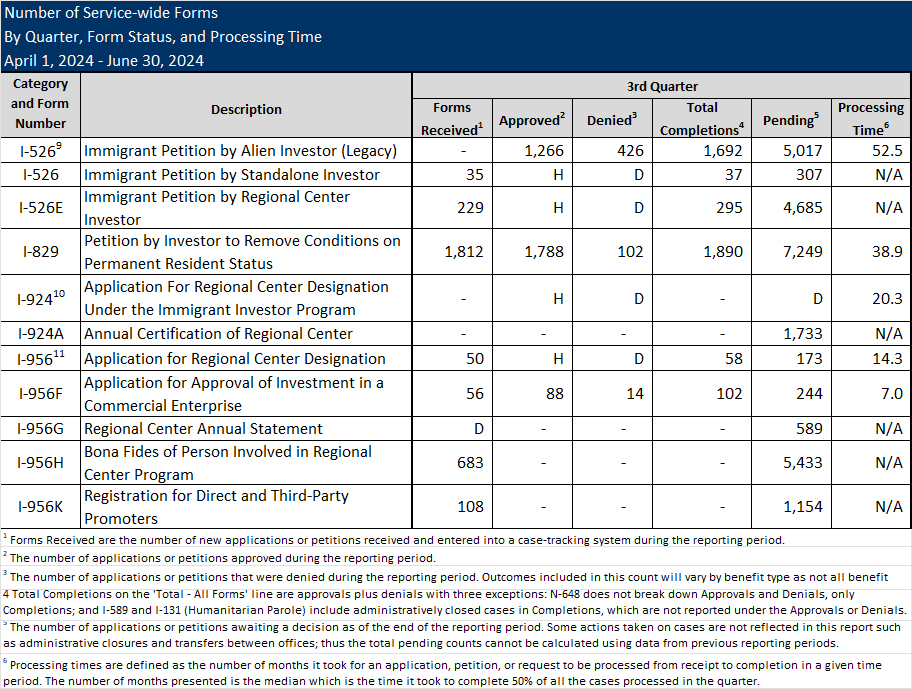
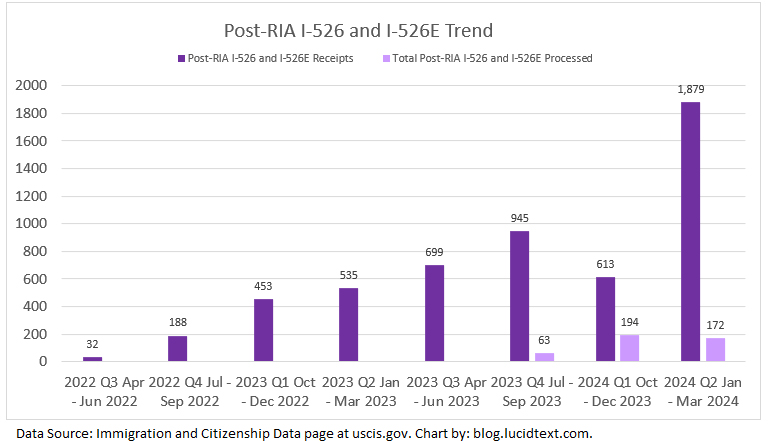
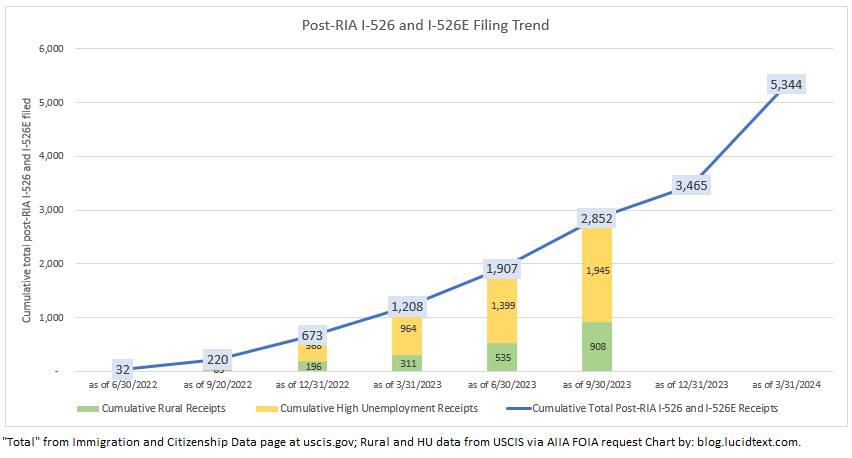
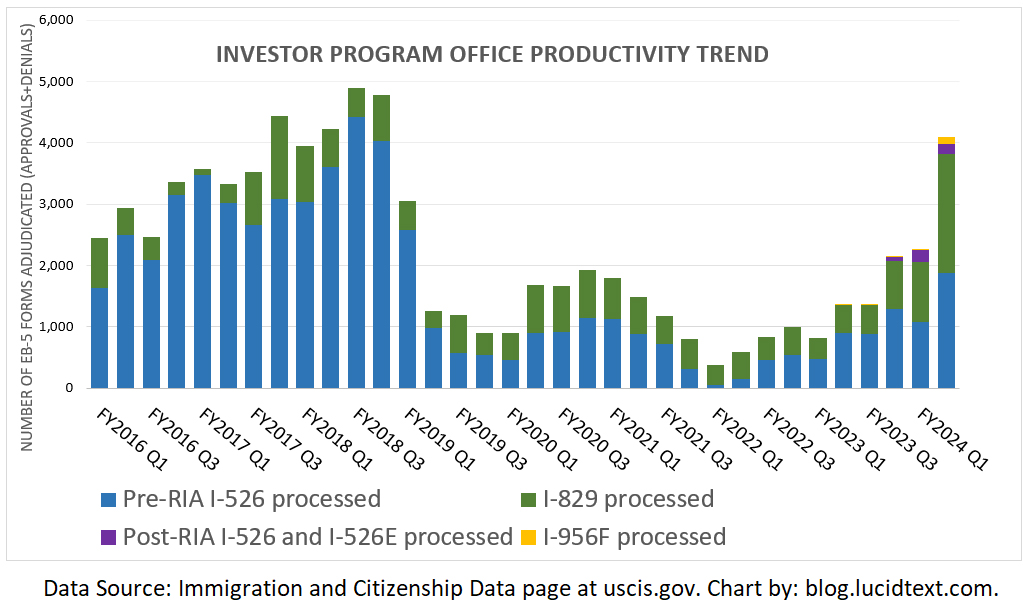
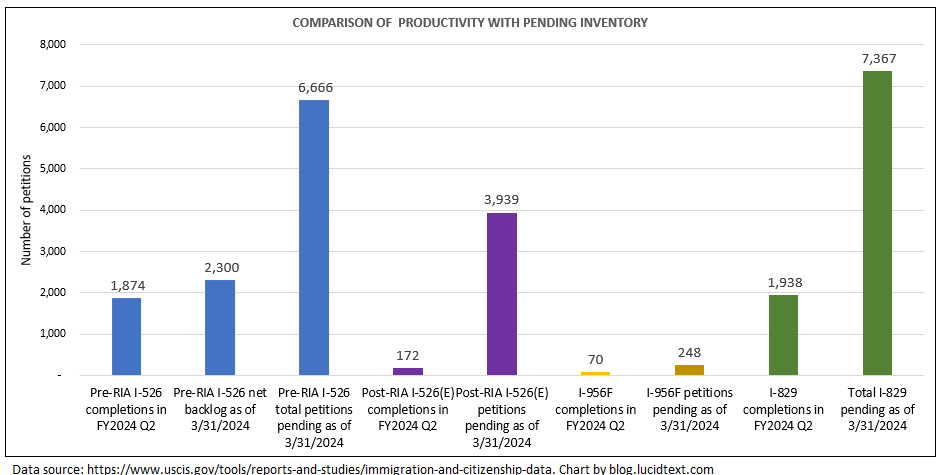
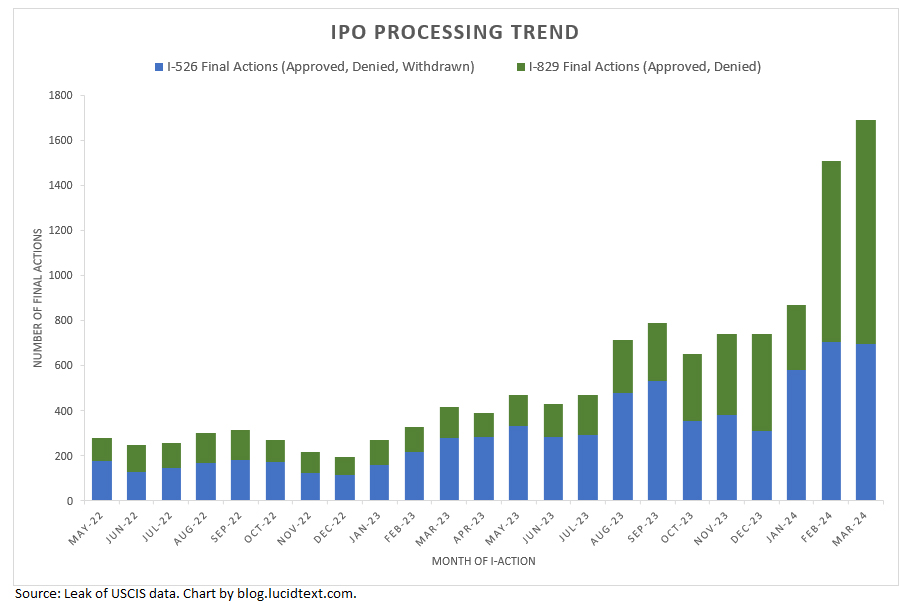
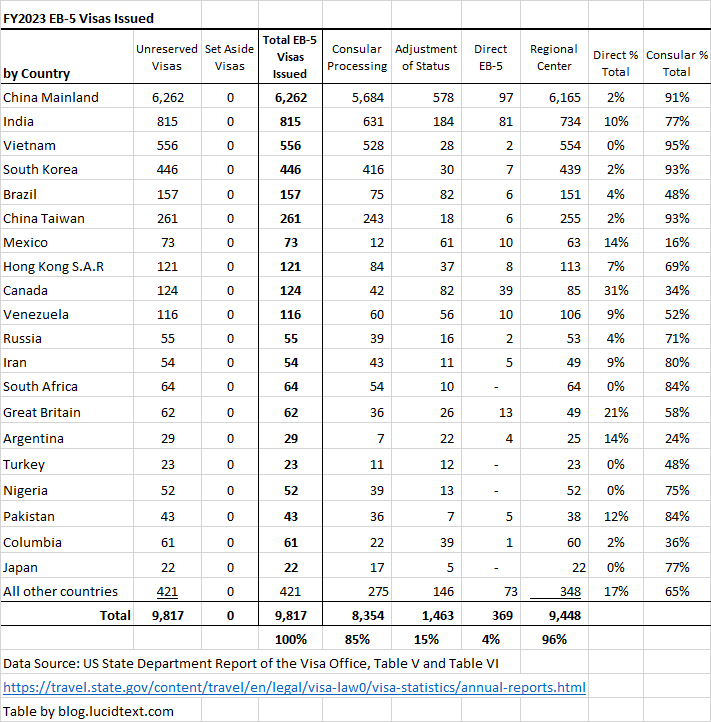
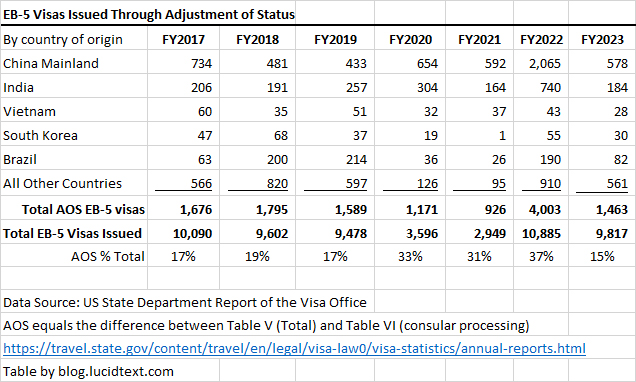
We’ve known that EB-5 set-aside visa retrogression is coming, but not when. Excess demand has been evident in data for I-526 and I-526E receipts for High Unemployment and (soon) Rural categories. (AIIA just published a FOIA response based on a September 2024 query, and before that we had the IIUSA FOIA data queried in July 2024, the WR Immigration FOIA data queried April 2024, and AIIA’s FOIA of 2023 data.) But when will high unemployment and rural investors reach the visa stage with their families in sufficient numbers to max out available visas? I had predicted that sluggish USCIS processing might slow-walk the backlog and keep the Visa Bulletin “current” through 2025 for EB-5 set asides. However, USCIS has apparently accelerated the volume of petition processing since last report in June 2024. The January 2025 Visa Bulletin includes a note with this warning signal for potential retrogression this year.
E. VISA AVAILABILIY IN THE EMPLOYMENT FIFTH PREFERENCE (EB-5) SET ASIDE CATEGORIES
The Department of State and USCIS note increased I-526E petition approvals, and both agencies see increasing numbers of individuals processing their applications to completion in the EB-5 set aside categories. It may become necessary to establish Dates for Filing and Final Action Dates during the fiscal year to ensure that issuances in these categories do not exceed annual limits. This situation will be continually monitored, and any necessary adjustments will be made accordingly.
—
Is this announcement significant? What changes, when the Visa Bulletin changes and imposes cut-off dates?
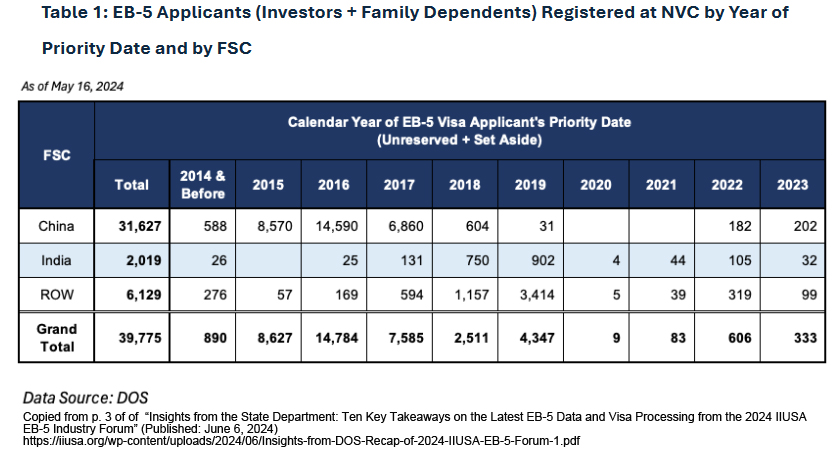
Let’s start with what doesn’t change: visa bulletin retrogression does not make expected visa wait times longer than they were already. A high unemployment investor with an August 1, 2024 priority date has a wait time that’s a function of the 3,995 other high unemployment investors who have earlier priority dates, and who will be joining their spouses and children to compete for available HU visas (2,200 or so visas this year, and 1,000 annually thereafter). A rural investor with an August 1, 2024 priority date has a wait time that’s a function of the 2,809 other rural investors who have earlier priority dates, and who will be joining their spouses and children to compete for available HU visas (4,400 or so visas this year, and 2,000 annually thereafter). The picture is a bit complicated by the fact that expected wait times for Chinese and Indians can be increased over time by subsequent Rest of the World investors, while ROW investors benefit when the Visa Bulletin limits China and India. But basically, an investor’s visa wait time originates in the demand/supply balance on the day he joined the back of the visa queue by filing I-526E. The wait time is not created or changed on the day that the front of the visa queue exceeds annual limits and triggers a cut-off date in the visa bulletin. The Visa Bulletin reflects a backlog situation; it does not create that situation. If anything, an early Visa Bulletin cut-off date would be good news for visa timing overall, because it would mean that USCIS petition processing is proceeding more quickly than expected, and that 2025 set-aside visas may be maximized instead of lost.
Visa Bulletin retrogression will change the EB-5 market, because many people don’t believe in backlogs until reflected in the visa bulletin. I sadly keep getting marketing emails and seeing published articles with variations on this false/misinformed statement: “There is no significant retrogression concern for the time being for post- RIA investors who invest in rural and high unemployment projects (all of which remain current as of the latest State Department Visa Bulletin).” When the Visa Bulletin is silent, people don’t do the math with I-526/I-526 receipt numbers, and don’t calculate for themselves that all rural visas this year and all high unemployment visas this decade could be absorbed by the investors+family already in line as of mid-2024. When the Visa Bulletin speaks, then industry and prospective investors don’t need math or FOIA data to see oversubscription. For the sake of EB-5 program integrity, I’m glad that the Visa Bulletin is starting to give warning of a backlog situation that should already be informing industry and investor decisions. It’s highly material for issuers and investors to know whether the incentive supporting the investment exists or not.
Does it matter that the warning in the January 2025 Visa Bulletin might not be fulfilled, and that set-aside cut-off dates may not actually appear in 2025? For historical reference, the December 2012 Visa Bulletin first warned that “It appears likely that a cut-off date will need to be established for the China Employment Fifth preference category at some point during second half of fiscal year 2013.” But as it happened, China EB-5 did not get its first cut-off date until the May 2015 Visa Bulletin — thanks again to slow/low-volume I-526 and consular processing. Did past Chinese EB-5 investors with priority dates between 2013 and 2015 benefit from the delay in imposing cut-off dates? Not really, because excess demand was a fact regardless of when reflected in the visa bulletin. A delay in processing the China EB-5 crowd just resulted in lost EB-5 visas in 2013 and 2014. Subsequent visa bulletins show that China-born EB-5 applicants with April 2015 priority dates did not start getting visas until 2017 or finish getting visas until 2022, no matter the word “Current” in the April 2015 Visa Bulletin. On the other hand, a delay in imposing cut-off dates was great for the EB-5 market, which stayed hot under the attractively “current” visa bulletin and was able to raise over $14.3 billion dollars from China-born investors from FY2013 to FY2015. The harvest would likely have been much smaller, had Chinese investors realized at the time that everyone with priority dates from May 2013 would end up experiencing retrogression delay.
As discussed above, a Final Action Date in the Visa Bulletin does not suddenly make wait times longer than they were already. So it’s not quite honest to say “hurry to secure your place in line by filing I-526E before the Visa Bulletin imposes Final Action Dates.” Two Indian high unemployment investors, one with April 31, 2025 priority date and one with a May 1, 2025 priority date, would have nearly the same place in line and thus nearly the same visa wait time outlook regardless of whether May 2025 happened to be the month when the Visa Bulletin showed retrogression. No matter the visa bulletin status on the date of filing, these two investors will wait for as long as it takes to grant green cards to other Indian HU applicants with earlier priority dates, and to rest-of-world HU applicants with earlier and later priority dates.
However, there is some sense in a message “hurry to file I-526E before the Visa Bulletin imposes a Date for Filing for your country/category” — at least for investors based in the United States. While Chart B Date for Filing does not change the time to get a visa, it does change the opportunity for concurrent filing. A Date for Filing stops new investors from filing I-485 with I-526E, meaning they can’t immediately file for employment and travel benefits. And these interim benefits are valuable. I’ve had direct EB-5 clients who made recent EB-5 investments for the sake of EAD and advance parole, even understanding the likelihood of severe green card delay. Our hypothetical friends with the April 31 and May 1 priority dates may have the same green card waits but very different experience during the wait, if hypothetical Visa Bulletin retrogression in May 2025 meant that one could get I-485 on file and thus able to apply for and enjoy interim employment and travel benefits, while the other couldn’t.
For additional analysis, see Lee Li’s new article for IIUSA January 2025 Visa Bulletin: EB-5 Dates Remain Unchanged, Noting Possibility of Cut-Off Dates for Reserved Categories. and IIUSA’s newly-refreshed EB-5 Visa Data Dashboard. I have been working on detailed analysis that I haven’t yet published, but note that I continue to make timely updates to my Key EB5 Backlog Data file (always linked to the top of the EB5 Timing and Processing Data pages so the public can access as much data input as I have at any given time). Recently I am particularly benefiting from AIIA’s FOIA requests for Pre-RIA I-526 inventory data and Post-RIA I-526 and I-526E receipt data, because these datasets provide a breakdown by month that can be used in forecasting visa bulletin cut-off dates. Combining the recent wealth of FOIA data with newly-available granular NVC and I-485 numbers, I’m considering reopening my customized EB-5 timing service in the new year.